
Living in Gdańsk
This Baltic city has a manageable, low-density feel and a calm pace, with remote work a genuine strength. Summers are mild and the air is fairly clean, but winter is dark even though rainy-grey days are not especially numerous. The main climate trade-off is winter light, not summer heat.
Gdańsk at a glance
Vital stats
Shown in USD: the local currency (PLN) moves too fast for stable monthly figures.
Where Gdańsk stands out
The metrics where Gdańsk sits farthest from the middle worldwide, good and bad.
Cheap to arrive, expensive to stay?
A typical one-bedroom in Gdańsk runs $926/mo. That is ~68% of one typical local employee’s mean net pay. This is a solo-newcomer stress test: sitting tenants, shared homes, subsidised housing and informal rents are deliberately outside the numerator.
The fastest way to test a shortlist is to go. A week on the ground tells you things no ranking can.
Partner link
Approved language-learning and international money resources for practical next steps.
Daily life in Gdańsk
How Gdańsk scores
Category by category
Affordability
68/100Gdańsk's open-market one-bedroom rent on a new lease is about $926 per month. That is roughly 68% of one typical employee's mean net pay, a rent burden labelled sharing likely.
Climate
temperateGdańsk has cool, mild summers and little muggy heat, with 166 bright days and 97 rainy-grey days across the year. Winter remains the catch: daylight is short and seasonal darkness is pronounced. Air quality is reasonably clean, and severe weather is uncommon.
Nature access
coastalThe sea defines it. Sandy Baltic beaches sit within the metro area, backed by forest and easy weekend escapes into the Kashubian lakes and coast, all stronger than landlocked Warsaw can offer. Forest and waterside access are real strengths. Mountains, though, are far away, and green space inside the city itself is only adequate.
Urban form
mid-sizedGdańsk has a low-density, walkable urban form with a strong mixed-use core and reasonably generous housing space. The metro population is about 398,000, so it feels manageable rather than metropolitan. Most daily trips can be made without a car, though the outer city is less effortless.
Public life & spaces
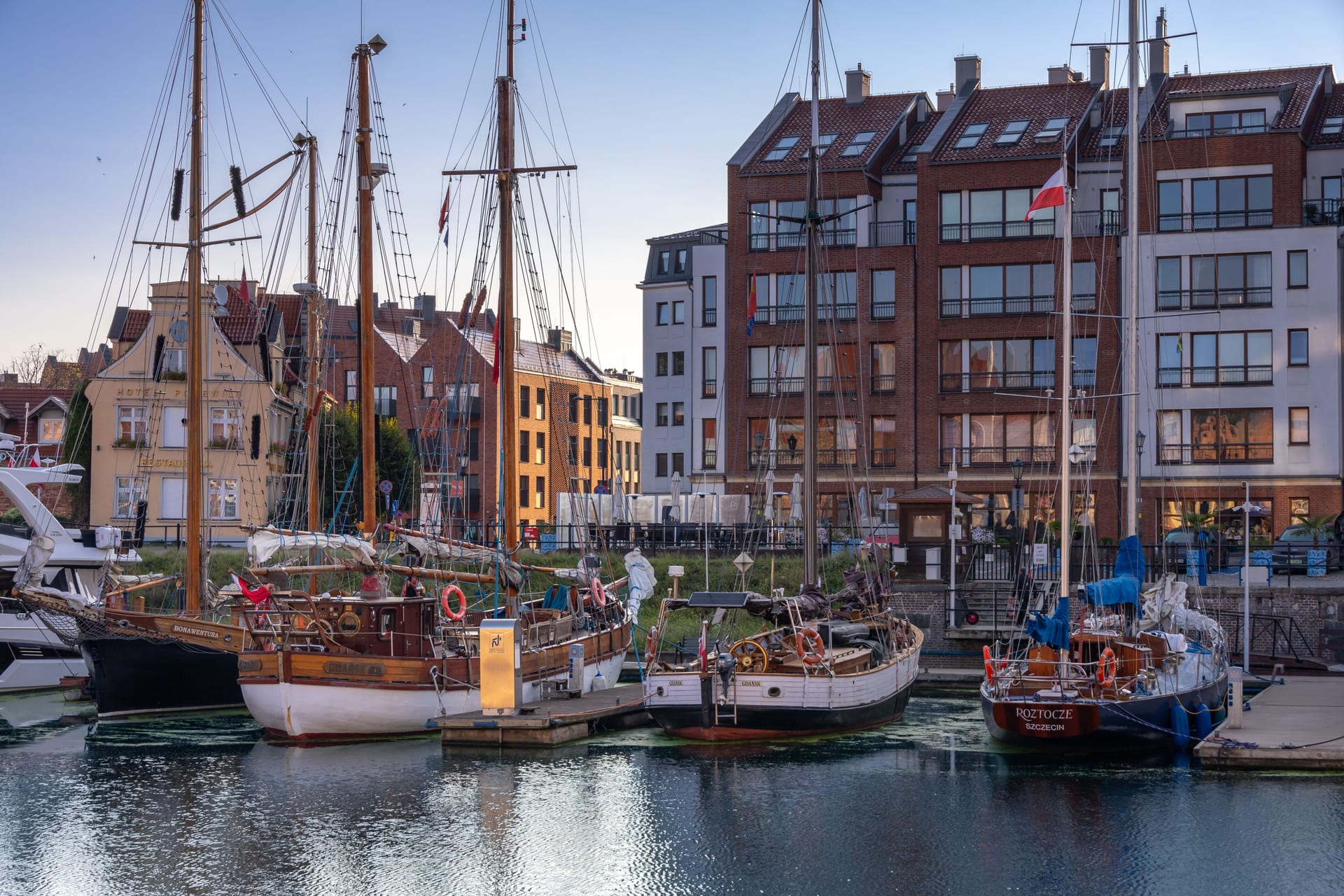
78/100Gdansk is clean and orderly, its reconstructed old town immaculate, the Long Market and Motlawa waterfront a genuinely beautiful built core. Public space here is a real strength. Living stays affordable too, with free festivals, summer beaches and a lively waterfront that cost almost nothing.
Safety
77/100A strong, reassuring axis. Violent crime is rare, the homicide rate is very low, and walking at night feels comfortable in most areas. Petty crime stays modest. The one softer note is traffic, where roads are less forgiving than in the safest Western European cities, but the day-to-day sense of security is high.
Healthcare
63/100Solid and serviceable rather than exceptional. Hospital and emergency care are reliable and out-of-pocket exposure stays low, in line with the rest of Poland. Doctor availability is thinner than in Western Europe, and English-speaking care is found in private clinics more than in the public system. Most routine needs are met without trouble.
Family life
68/100A workable place to raise children. Child safety is high, parental leave is generous by regional standards, and family housing is more attainable than in Warsaw or Western capitals. Schools and childcare are decent, parks and playgrounds plentiful, and the coast adds easy outdoor time. Work-life balance is reasonable without being a standout.
Career
59/100The local market combines very low unemployment, at about 3%, with strong remote-work conditions. Local pay is modest, and English-language roles exist, but the professional network and startup base are thin. Gdańsk suits remote earners better than people building a highly connected local career.
Culture & food
69/100Strong on local character, lighter on international polish. Gdańsk has a distinct maritime identity, good restaurants, and a steady run of museums and events tied to its history. The international community is smaller than in Warsaw, and nightlife and the café scene are pleasant rather than electric. Sopot next door adds summer buzz to the mix.
Ease of integration
52/100Polish is the working language of daily life, and while English goes a fair way in younger and professional circles, integrating fully means learning the language. Locals are reasonably open to newcomers, though the international crowd is small and society leans traditional, so building a settled local circle takes patience and some Polish.
Connectivity
62/100A quiet strength. Trams and trains move people well across the Tricity, cycling infrastructure is genuinely good, and internet speeds are fast. Digital bureaucracy is more advanced than in much of Western Europe, and utilities are dependable. The airport handles European routes capably, if without the long-haul reach of a major capital hub.
Social values
mixedThe most conservative axis to weigh. Public culture leans traditional and religious, and on social liberalism, LGBTQ acceptance, and visible diversity Gdańsk sits below Western European norms, much like the rest of Poland. As a port city it tilts somewhat more open than the interior, but newcomers from liberal cities should set expectations accordingly.
Relocation ease
56/100Comparatively smooth for an EU destination. Finding a flat is easier here than in Warsaw and far easier than in Berlin or Lisbon, and banking and admin are manageable. The real friction is the Polish language, which is demanding, plus the usual EU paperwork. Cultural adjustment is moderate and the bureaucracy is increasingly digital.
The trade-offs
A year in Gdańsk
Aug peaks around 24°C, Jan days top out near 3°C, and the year brings roughly 166 bright days.
Can you actually move here?
The hard limits people most often bring to a move, scored against Gdańsk's data.
Moving with a pet
Bringing a pet is straightforward. As an EU country, Poland follows the standard pet passport and microchip rules, so a cat or dog from within Europe arrives with little fuss, and requirements from further afield remain manageable.
Who Gdańsk works for
Answer the questionnaire and see where Gdańsk lands for you.
Take the free questionnaireWhere else to look
Gdańsk vs. comparable cities

The cities people weigh against Gdańsk
Unexpected siblings
Far from Gdańsk on the map, close across all 14 categories of daily life.


