
Living in Pretoria
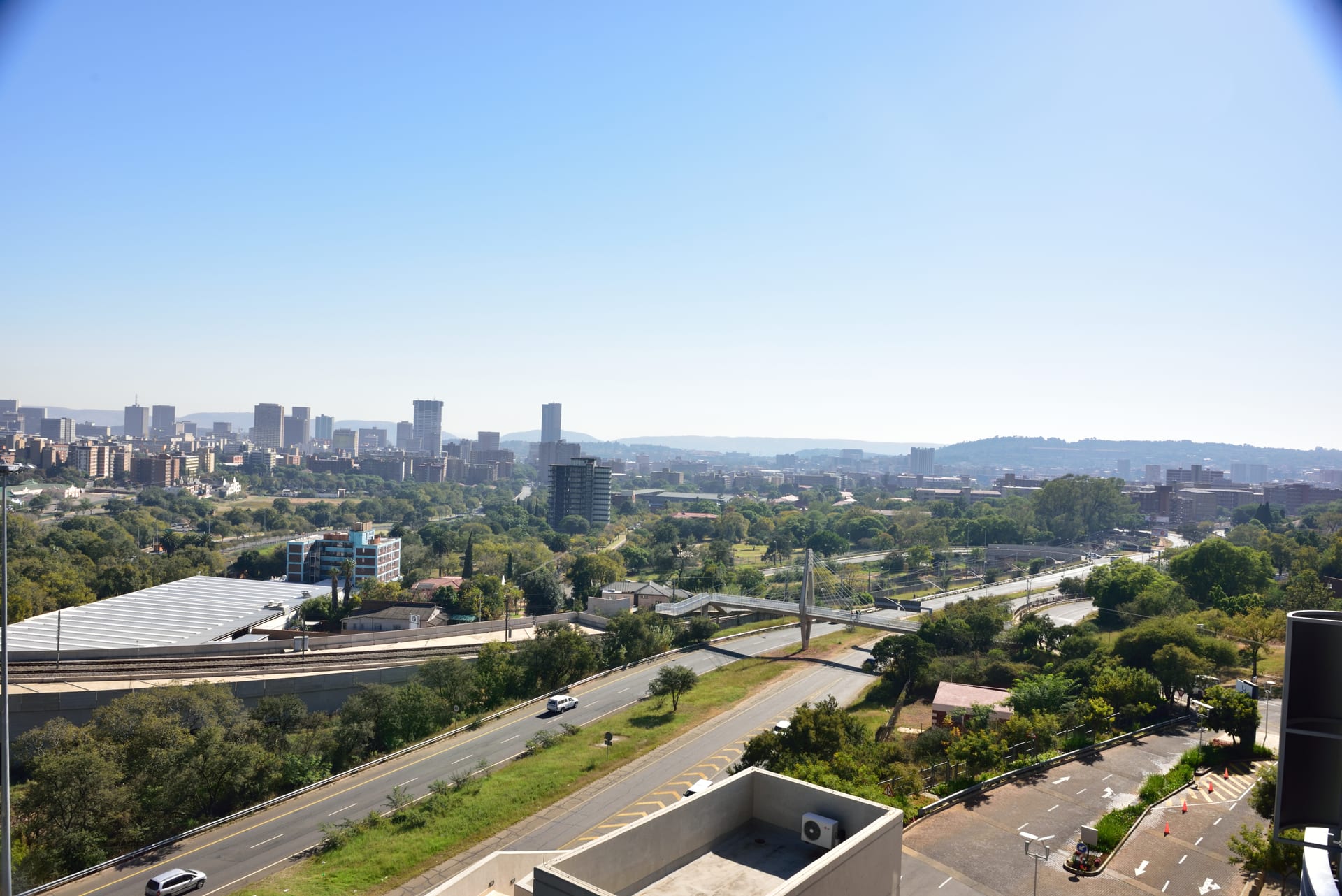
South Africa's administrative capital sits on the Highveld next to Johannesburg, and it runs at a slower, leafier, more government-town pace than its big neighbour. Living costs are very low by international standards, space is generous, and English carries day-to-day life easily. The trade-off is real and constant: safety is a daily concern and getting around means driving.
Pretoria at a glance
Vital stats
Shown in USD: the local currency (ZAR) moves too fast for stable monthly figures.
Where Pretoria stands out
The metrics where Pretoria sits farthest from the middle worldwide, good and bad.
Cheap to arrive, expensive to stay?
A typical one-bedroom in Pretoria runs $384/mo. That is ~91% of one typical local employee’s mean net pay. This is a solo-newcomer stress test: sitting tenants, shared homes, subsidised housing and informal rents are deliberately outside the numerator.
The fastest way to test a shortlist is to go. A week on the ground tells you things no ranking can.
Partner link
Approved language-learning and international money resources for practical next steps.
Daily life in Pretoria
How Pretoria scores
Category by category
Affordability
71/100Pretoria's open-market one-bedroom rent on a new lease is about $384 per month. That is roughly 91% of one typical employee's mean net pay, a rent burden labelled solo unlikely.
Climate
mediterraneanWarm summers, mild winter days, and a mostly dry-feeling climate define Pretoria, with only brief muggy spells. The sky is usually bright, with roughly 269 bright days and fewer than 70 rainy-grey days. Winter nights are cold.
Nature access
leafyThere is no coast here, which is the obvious gap against Cape Town and Durban. What Pretoria does have is decent green space, jacaranda-lined suburbs, and a handful of nearby reserves and bushveld escapes for weekends. Serious hiking, forest, and mountain access are limited compared with the country's more dramatic regions, so nature is pleasant rather than a headline draw.
Urban form
large cityLow density defines Pretoria. The metro area has roughly 1.8 million people, with generous housing space but little street-level mixing. Most errands require a car, walkable districts are limited, and the quiet suburban pace comes at the cost of shops and cafes within easy reach.
Public life & spaces
48/100Pretoria is greener and more orderly than Johannesburg, an administrative capital with the Union Buildings and jacaranda streets, but still car-dependent and gated, with malls doing the work of public squares. Built shared space stays thin. Costs are moderate and the rhythm quiet, with fewer free events than its size suggests.
Safety
30/100Safety is the hardest part of living in Pretoria, and it shapes daily habits. Violent crime and break-ins are a genuine concern, perceived safety is low, and going out after dark on foot is something most residents simply avoid. Walled homes, security companies, and car-based routines are the norm. Crime levels do sit somewhat below Cape Town's, but this remains a city where caution is constant.
Healthcare
55/100Healthcare splits sharply between public and private. The private hospitals used by most expats and middle-class locals are competent and almost entirely English-speaking, which makes navigating care straightforward. The public system is stretched thin, and the overall density of doctors is low, so good care here effectively means private medical cover and the budget to back it.
Family life
45/100Pretoria can work well for families who can afford the private side of life: large homes with gardens, plenty of outdoor time, and a network of private schools. The serious caveat is child safety, which is low and means supervised, driven, fairly enclosed childhoods rather than free roaming. Parental leave and public childcare support are thin, so families lean on private arrangements.
Career
54/100English is widely usable in Pretoria, but the local market is constrained by unemployment of about 32%. Industry breadth and professional networks are limited, and local pay is low. It suits people with a secured role or income from elsewhere better than open-ended local job hunting.
Culture & food
61/100Pretoria's cultural life is solid without the wattage of Cape Town or Johannesburg next door. Good restaurants, a comfortable cafe scene, museums, and the university crowd keep things interesting, and local South African culture runs strong. Nightlife and the music and art scene are quieter and more suburban, so this is a steadier, more domestic city than a nightlife destination.
Ease of integration
59/100English is the working language and is spoken almost everywhere, so newcomers can function from day one without learning Afrikaans, Zulu, or Sotho. Society is reasonably open to foreigners and broadly diverse, though civic trust is low and life tends to organise around private circles and secured suburbs. Building a real social network takes effort but the shared language removes the biggest barrier.
Connectivity
41/100Infrastructure is patchy and a daily adjustment. Public transport is minimal and unreliable, cycling provision is nearly absent, and internet speeds lag well behind richer cities, so a car and backup power and connectivity are practically essential. The brighter spots are a well-connected international airport nearby and roads that flow more smoothly than in many bigger metros.
Social values
mixedPretoria reads as moderate on the South African spectrum: more socially liberal and secular than the Gulf, but more conservative and traditional than cosmopolitan Cape Town. The country's constitution is among the most progressive anywhere on gender and LGBTQ rights, and that legal openness is real, even if everyday attitudes vary a lot by community.
Relocation ease
54/100The single biggest easing factor is language, since arriving into an English-speaking city removes a huge layer of friction. Against that, the visa and work-authorisation process is bureaucratic and slow, and banking and admin setup take patience. Finding housing is relatively painless, and cultural adjustment is gentler than many destinations, but expect paperwork to be the main headache.
The trade-offs
A year in Pretoria
Jan peaks around 28°C, Jun days top out near 20°C, and the year brings roughly 269 bright days.
Can you actually move here?
The hard limits people most often bring to a move, scored against Pretoria's data.
Moving with a pet
Bringing a pet to Pretoria is moderately involved: South Africa requires vaccinations, an import permit, and health certification, with rules tighter for some breeds and origin countries. It is manageable with planning, roughly on par with other South African cities, so start the paperwork early.
Who Pretoria works for
Answer the questionnaire and see where Pretoria lands for you.
Take the free questionnaireWhere else to look
Pretoria vs. comparable cities


Objective scores (0–100) for Pretoria and its 4 nearest comparable cities.
The cities people weigh against Pretoria
Unexpected siblings
Far from Pretoria on the map, close across all 14 categories of daily life.

