
Living in Nairobi
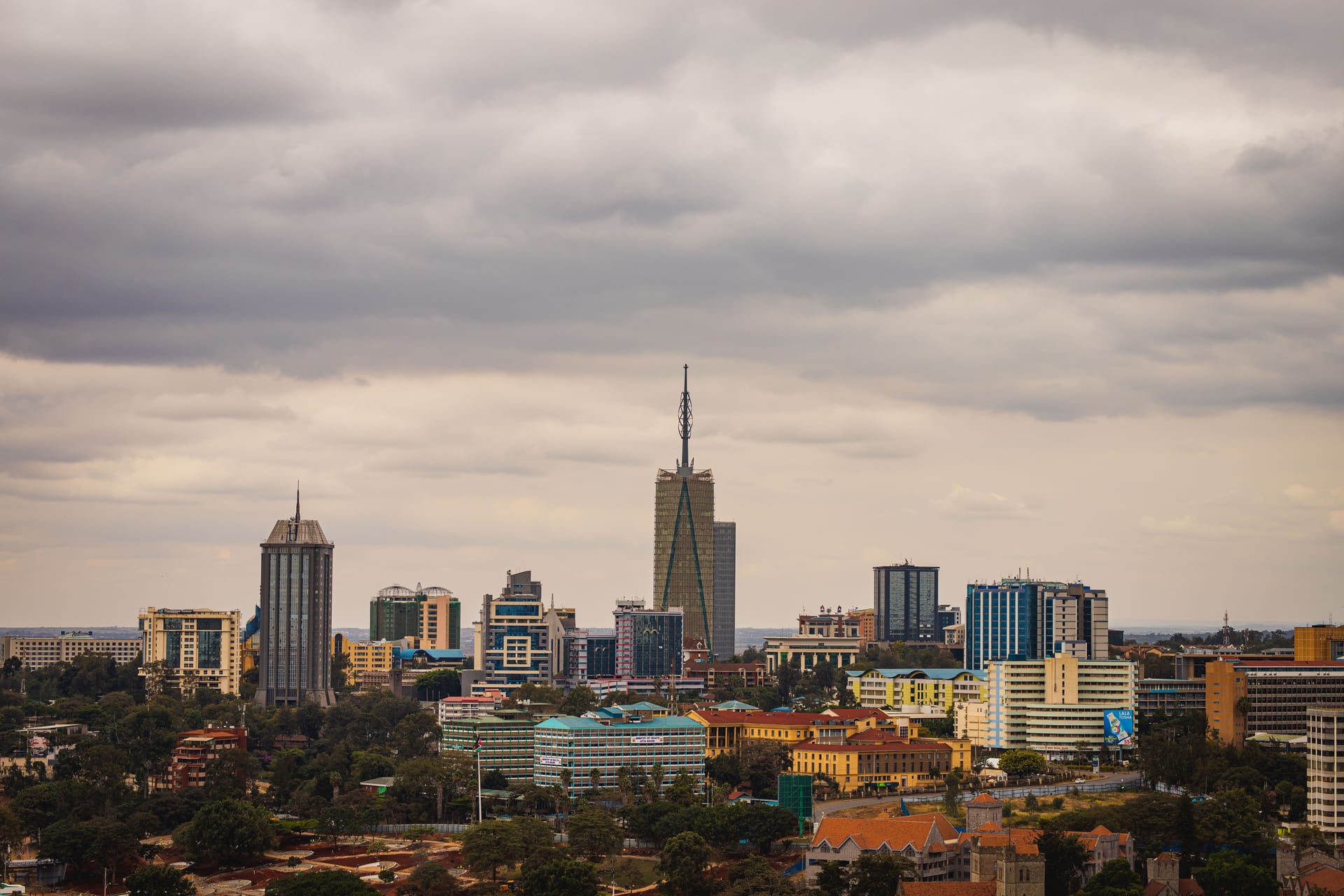
Kenya's capital and East Africa's commercial anchor, a high-altitude, fast-growing city where wildlife on the doorstep meets a real business hub. Daily life is inexpensive and the climate is famously gentle, but traffic, patchy infrastructure and uneven safety are part of the bargain. It runs at a more chaotic pace than calmer regional centres like Kigali.
Nairobi at a glance
Vital stats
Shown in USD: the local currency (KES) moves too fast for stable monthly figures.
Where Nairobi stands out
The metrics where Nairobi sits farthest from the middle worldwide, good and bad.
Cheap to arrive, expensive to stay?
A typical one-bedroom in Nairobi runs $253/mo. That is beyond the mean net pay of a typical local employee. This is a solo-newcomer stress test: sitting tenants, shared homes, subsidised housing and informal rents are deliberately outside the numerator.
The fastest way to test a shortlist is to go. A week on the ground tells you things no ranking can.
Partner link
Approved language-learning and international money resources for practical next steps.
Daily life in Nairobi
How Nairobi scores
Category by category
Affordability
68/100Nairobi's open-market one-bedroom rent on a new lease is about $253 per month. The rent-to-income measure reaches its 120% ceiling against one typical employee's mean net pay, so the underlying burden may be higher; the band is beyond local pay.
Climate
temperateNairobi stays mild rather than hot. About 174 bright days are balanced by roughly 76 rainy-grey days, and muggy conditions are occasional rather than a constant feature. Low seasonal darkness keeps the year from feeling gloomy, though the two rainy seasons bring wet stretches.
Nature access
wildThis is the city's strongest hand. Nairobi National Park, where lions and rhinos roam within sight of the skyline, sits right at the edge of town, and the wider region opens onto the Rift Valley, the Maasai Mara and a string of weekend safari options few capitals can match. Inside the city itself green space is thinner and there is no coast, since Nairobi is firmly inland.
Urban form
large cityNairobi is a sprawling, tightly packed city, and getting around without a car is hard, so daily life tends to revolve around driving. Walkability and mixed-use streets are limited, and the layout favours gated estates and compounds over a continuous urban fabric. Homes still come with a fair amount of space for the money.
Public life & spaces
33/100Nairobi is mixed: a modern core ringed by litter, informal settlement and security-conscious habits that push life behind walls and into malls. Public space is thin beyond a few CBD plazas, and it is a car city. But daily life is cheap, and the music and nightlife scene is genuinely lively and accessible.
Safety
30/100Safety is genuinely mixed and worth taking seriously. Serious violent crime as measured by homicide is lower than its reputation suggests, but petty theft, mugging and a wariness about walking alone at night are real, everyday concerns. Road safety is poor and the political backdrop can be volatile around elections. Residents tend to plan their movements and where they live carefully.
Healthcare
43/100Healthcare is one of Nairobi's weaker areas. Top private hospitals serve the city and English is the working language of medicine, which eases things for foreigners, but doctors are stretched thin, emergency response is unreliable, and out-of-pocket costs at good facilities add up. Many expatriates carry international insurance and treat serious care as something to plan around.
Family life
38/100Family life is a trade-off. Childcare and domestic help are affordable, and the outdoor, open-air childhood on offer here is a genuine draw. On the other hand, public schooling is weak, so families lean on costly private and international schools, and concerns about child safety and the broader environment temper the picture.
Career
65/100Nairobi has a credible professional base in the right fields, with strong English-language access and a meaningful technology ecosystem. Typical local pay is low, however, and the overall market is not deep. It is a better proposition for regional or international work than for anyone depending on local pay alone.
Culture & food
74/100The food and culture scene is solid without being a regional powerhouse. There is a lively restaurant, cafe and nightlife circuit, a strong music and arts thread, and a large, well-established international community that keeps things outward-looking. Everything runs in English, so plugging into the social side is straightforward for newcomers.
Ease of integration
74/100English is an official language and effectively the lingua franca of work and city life, so the practical barrier to connecting is low even before any Swahili. Nairobi has a deep, long-settled foreign and pan-African community, and locals are fairly open to outsiders. Newcomers tend to find their footing quickly through work, church or the wide expat networks, though the city is socially more conservative than that openness suggests.
Connectivity
34/100Infrastructure is a recurring frustration. Traffic congestion is notorious, public transport leans on informal matatu minibuses rather than a built-out system, and reliable utilities and connectivity cannot be taken for granted. The airport gives strong onward links across Africa and beyond, but day-to-day, the basics demand patience and contingency plans.
Social values
traditionalSocially, Nairobi is cosmopolitan in its mix yet conservative in its norms. It is welcoming to foreigners and proudly diverse and pan-African, but liberal social attitudes are limited, and LGBTQ acceptance is low against the backdrop of restrictive national law. Civic order and institutional trust are shaky. The overall tone welcomes outsiders while holding to traditional values.
Relocation ease
48/100For an English speaker the move is smoother than the wider region might suggest, since there is essentially no language barrier and finding housing is manageable through the well-trodden expat market. Visas and residence permits are workable if not effortless, and banking and admin run on the slow side. Bureaucracy and limited digital government are the main sources of friction.
The trade-offs
A year in Nairobi
Mar peaks around 28°C, Jul days top out near 22°C, and the year brings roughly 174 bright days.
Can you actually move here?
The hard limits people most often bring to a move, scored against Nairobi's data.
Moving with a pet
Bringing a pet to Nairobi is moderately involved: expect import permits, vaccination and health paperwork, and some lead time, but it is a well-worn path for relocating households and entirely doable with planning.
Who Nairobi works for
Answer the questionnaire and see where Nairobi lands for you.
Take the free questionnaireWhere else to look
Nairobi vs. comparable cities


Objective scores (0–100) for Nairobi and its 4 nearest comparable cities.
The cities people weigh against Nairobi
Unexpected siblings
Far from Nairobi on the map, close across all 14 categories of daily life.


