
Living in Zanzibar City
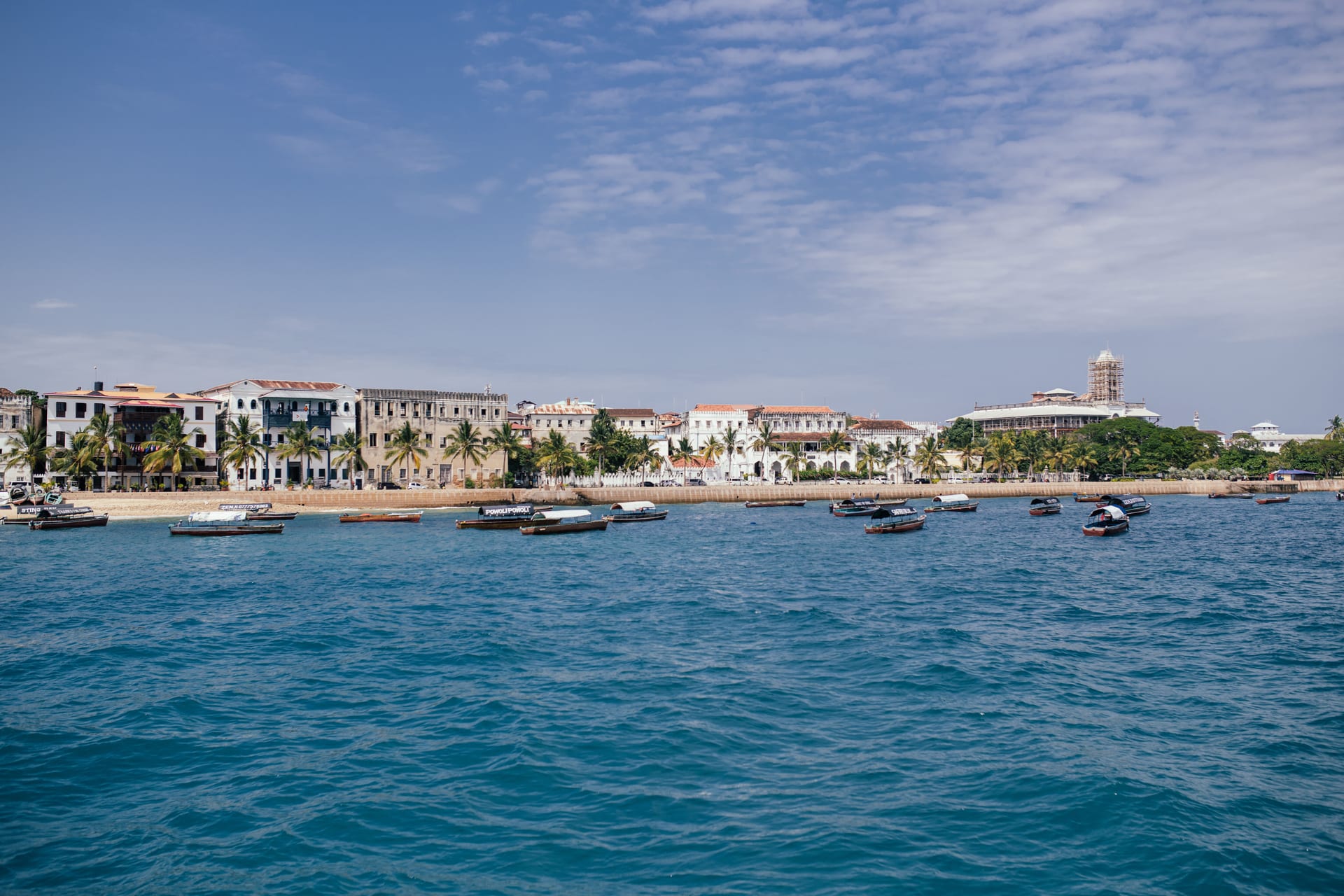
Tropical warmth and light define Zanzibar City, but the climate is very damp, with muggy conditions through almost the whole year and only about 145 bright days. Typical local pay is low, so the city is a better fit for a lifestyle move funded from elsewhere than for a locally driven career.
Zanzibar City at a glance
Vital stats
Shown in USD: the local currency (TZS) moves too fast for stable monthly figures.
Where Zanzibar City stands out
The metrics where Zanzibar City sits farthest from the middle worldwide, good and bad.
Cheap to arrive, expensive to stay?
A typical one-bedroom in Zanzibar City runs $148/mo. That is ~83% of one typical local employee’s mean net pay. This is a solo-newcomer stress test: sitting tenants, shared homes, subsidised housing and informal rents are deliberately outside the numerator.
The fastest way to test a shortlist is to go. A week on the ground tells you things no ranking can.
Partner link
Approved language-learning and international money resources for practical next steps.
Daily life in Zanzibar City
How Zanzibar City scores
Category by category
Affordability
77/100Zanzibar City's open-market one-bedroom rent on a new lease is about $148 per month. That is roughly 83% of one typical employee's mean net pay, a rent burden labelled solo unlikely.
Climate
tropicalWarmth and humidity define Zanzibar City through every season, with almost no seasonal darkness. Muggy conditions persist practically all year, and the sky is more changeable than its tropical reputation suggests: there are about 145 bright days and 115 rainy-grey days. The appeal is steady tropical warmth, not dry, predictable weather.
Nature access
coastalThe draw here is the ocean. Beaches and reef are world-class, and short trips reach quiet coves, sandbanks, and dive sites few mainland cities can match. Inland nature is thin, though. No mountains, few rivers or lakes, little in the way of forest or formal hiking, and not much green space inside the town itself.
Urban form
small cityThis is a tiny town by world standards, walkable at its core and far less car-bound than mainland Tanzanian cities. The historic stone quarter is dense and human-scaled, with daily life, shops, and homes folded together. Pace is gentle to the point of sleepy, suburbs are basic, and anyone expecting a real metropolis will find it modest.
Public life & spaces
48/100Zanzibar's Stone Town is atmospheric but worn, litter gathering in its historic alleys and seafront, with shared space mostly the old squares and the waterfront at dusk. Upkeep is light. What carries it is cheapness and outdoor life: beaches, festivals and street food that cost little and keep the evenings busy.
Safety
50/100Zanzibar City can feel calm in daytime, but serious violence is not absent: the homicide rate is about 3.8 per 100,000. Petty theft is the more routine concern, night walking feels less secure, and roads add a separate hazard. The island's political backdrop also deserves attention.
Healthcare
29/100This is the weakest part of island life. Local hospitals are limited, specialists are scarce, and serious or emergency cases often mean evacuation to the mainland or abroad. Routine private care exists and English is usable in clinics, but anyone with real medical needs should not count on local capacity. Doctor availability is among the thinnest anywhere.
Family life
41/100Family life leans on the outdoors, with a safe-feeling, sea-centred childhood and a relaxed, unhurried work culture. The hard parts are services. School options are limited and mostly international or private, dedicated playgrounds are sparse, and parental-leave norms are minimal. Childcare is more workable, sitting around the middle of the pack. Outdoorsy families adapt more easily than those who want strong institutions.
Career
38/100Zanzibar City has a very small local market, with thin professional networks and almost no startup depth. Typical local pay is low. Low unemployment sits alongside that narrow market, so it does not translate into broad career choice for newcomers.
Culture & food
67/100Swahili coastal culture is the standout, a deep blend of African, Arab, and Indian influence that shapes food, music, and daily life far more than in glossier destinations like Dubai. Spice-driven cooking, a strong local music tradition, and a couple of notable festivals give the place real character. Restaurants and cafes are decent and improving, but nightlife is quiet, in keeping with a conservative Muslim island.
Ease of integration
70/100Swahili is the everyday language and English goes a long way in tourism and business, so newcomers can function without fluency. Islanders are warm and broadly welcoming to foreigners, and a small expat and traveller scene already exists. Real integration takes effort, though. The culture is conservative and tight-knit, and learning some Swahili opens doors that English alone will not.
Connectivity
22/100Infrastructure is the standing frustration. Internet is slow and unreliable, power and water cuts happen, public transport amounts to informal minibuses, and there are no trains. The upside is a quiet town with light traffic and an airport that connects reasonably for its size. Anyone dependent on fast, stable connectivity should plan around the gaps.
Social values
traditionalSocially this is a conservative, largely Muslim society where religion shapes public life and traditional norms hold firm. Dress and behaviour are expected to be modest, LGBTQ acceptance is effectively absent, and gender roles are traditional. People are notably open and hospitable to foreigners, but the prevailing values sit far from a secular, liberal city like Cape Town.
Relocation ease
37/100Settling in is a mixed picture. Language is rarely a hard wall since English works in daily and official dealings, but bureaucracy is slow, work authorisation is awkward, and banking and admin take patience. Visa rules are workable rather than easy. The cultural adjustment to island pace and conservative norms is real, and finding good housing as an outsider takes legwork.
The trade-offs
A year in Zanzibar City
Mar peaks around 31°C, Jun days top out near 28°C, and the year brings roughly 145 bright days.
Can you actually move here?
The hard limits people most often bring to a move, scored against Zanzibar City's data.
Moving with a pet
Bringing a pet is moderately involved. Import is feasible with the right vaccination and health paperwork, but processes are slow and inconsistent, and veterinary care on the island is basic, so plan ahead and keep documents in order.
Who Zanzibar City works for
Answer the questionnaire and see where Zanzibar City lands for you.
Take the free questionnaireWhere else to look
Zanzibar City vs. comparable cities


Objective scores (0–100) for Zanzibar City and its 4 nearest comparable cities.
The cities people weigh against Zanzibar City
Unexpected siblings
Far from Zanzibar City on the map, close across all 14 categories of daily life.


