Affordability
68/100Mombasa's open-market one-bedroom rent on a new lease is about $171 per month. The rent-to-income measure reaches its 120% ceiling against one typical employee's mean net pay, so the underlying burden may be higher; the band is beyond local pay.
Climate
tropicalYear-round warmth defines Mombasa, with little seasonal darkness. Humidity is the defining cost: muggy conditions are effectively year-round, while about 149 days are bright and roughly 121 are rainy or grey. People who want tropical warmth will find it, but clear, dry days are not the default.
Nature access
coastalThe ocean is the headline. Beaches and reef are right there, and Kenya's famous national parks sit within reach for weekends away, which is more than landlocked Nairobi can claim. Inside the city itself green space is thin, and anyone wanting mountains, forest trails or serious hiking will find the coast doesn't deliver.
Urban form
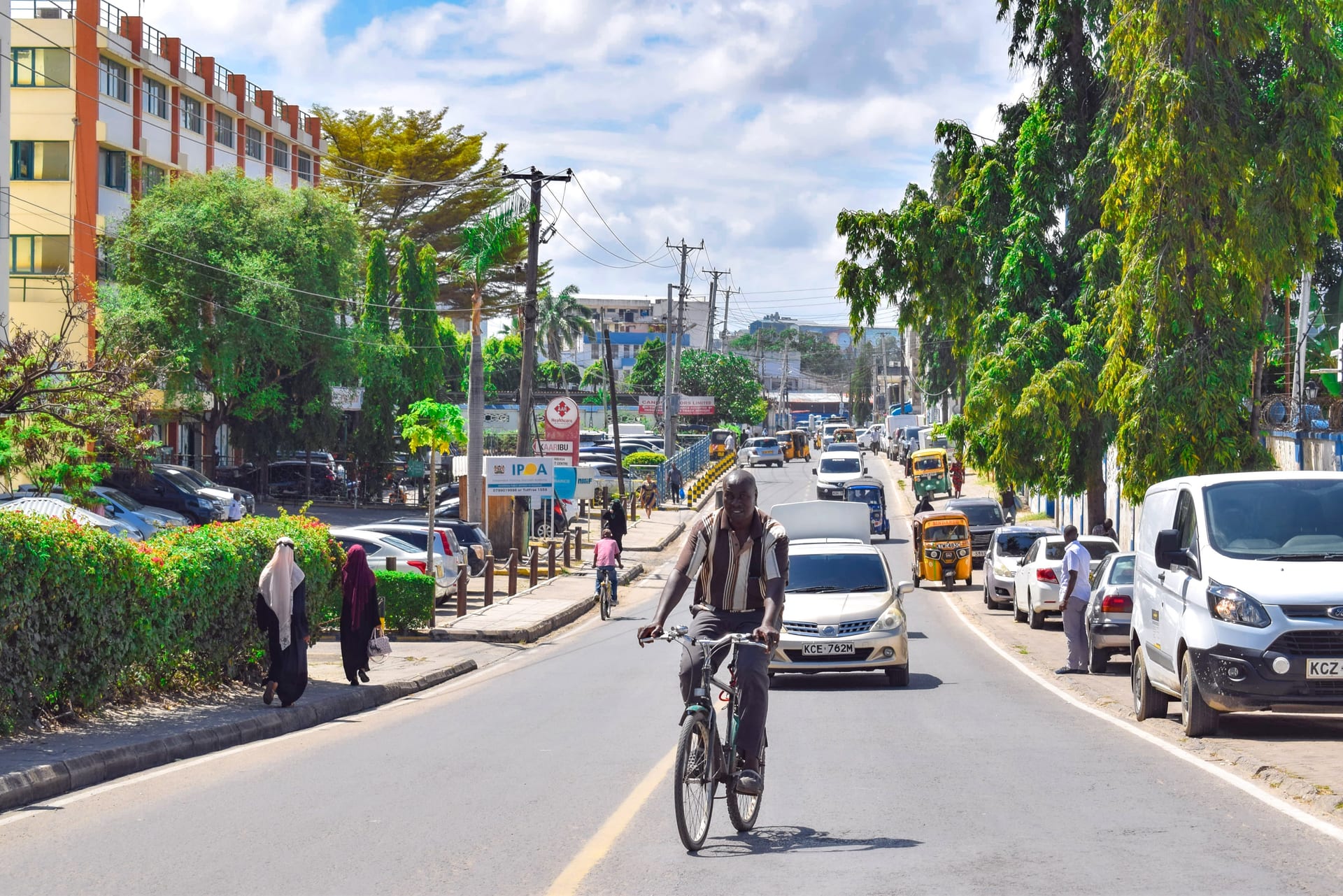
large cityThis is a compact, low-rise city with a relaxed tempo, closer in pace to Cape Town than to Nairobi's churn. Getting around mostly means a car or a matatu, since walkability is limited and footpaths patchy. Neighbourhood quality is middling and the layout sprawls rather than concentrates.
Public life & spaces
41/100Mombasa is coastal and humid, its old town atmospheric but worn, with litter common and shared space mostly the seafront and narrow Swahili lanes. Little is formally built or maintained. The compensation is cheapness and life lived outside: beaches, street food and old-town bustle that cost almost nothing and run all day.
Safety
35/100The picture is mixed. Serious violent crime is comparatively rare for the region, well below Cape Town's levels, but petty theft is common and walking around after dark calls for caution. Road safety is poor and the national political backdrop carries some instability, so a degree of street-smarts becomes part of daily life.
Healthcare
37/100Healthcare is one of Mombasa's real weak spots. Doctors are scarce, hospital and emergency-care quality is limited, and serious cases often mean travelling to Nairobi or abroad. The one bright spot is language: care is delivered in English, so explaining symptoms and understanding advice is rarely the obstacle.
Family life
39/100For families the appeal is an outdoor childhood, with warm weather, the sea and a gentler work-life culture than Nairobi or the Gulf cities offer. Childcare is reasonably available. The trade-offs are real, though: school quality, playgrounds and child-safety provisions all fall short of what a bigger or wealthier city provides.
Career
43/100The local career market is narrow, with limited industry depth, weak professional networks, and little startup activity. English is an advantage, but typical local pay is low. Mombasa is a poor fit for someone whose relocation depends on building a strong local career.
Culture & food
60/100Mombasa's strength is its own Swahili coastal culture, a distinct blend of African, Arab and Indian influence that runs deep in the food and the old town. English goes a long way alongside Swahili, so newcomers settle in easily. The formal cultural scene of restaurants, cafes, museums and live music is modest compared with Nairobi or Cape Town.
Ease of integration
74/100Both Swahili and English are widely spoken, so the language barrier for an English-speaking newcomer is essentially nil, and locals tend to be welcoming to outsiders. Society leans traditional and conservative, so building real friendships rewards patience and respect for local norms. There's a small international community to lean on while finding footing.
Connectivity
27/100Infrastructure is where the city shows its limits. Public transport is informal, cycling provision barely exists, and internet speeds rank among the slowest of the cities here. Roads flow a little better than Nairobi's, and the airport connects the coast, but reliability across utilities is something to plan around.
Social values
traditionalMombasa is socially conservative, more so than Nairobi and far more than Cape Town, with strong Islamic and traditional influence shaping public life. Attitudes toward LGBTQ people are restrictive, and gender norms remain traditional. Residents are reasonably open to foreigners, but anyone expecting a liberal, secular public culture should set expectations accordingly.
Relocation ease
46/100Moving here is smoother than the region's average in the ways that matter most: English removes the language barrier entirely, and finding housing is relatively straightforward. Visas are manageable for the area. Bureaucracy, banking and work authorization are the usual friction points, broadly in line with Nairobi and slower than Dubai.