
Living in Kigali
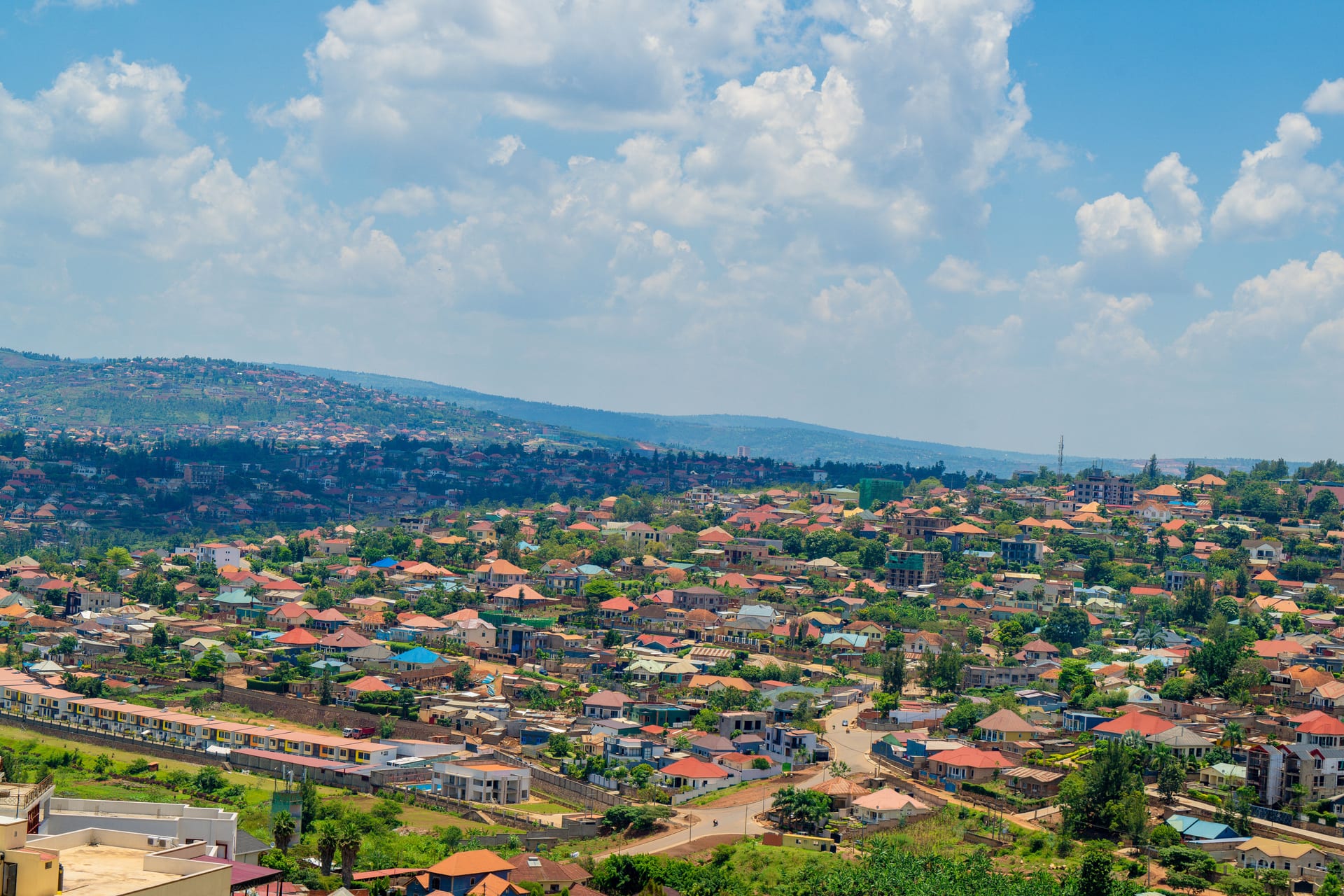
Kigali is the cleanest, calmest capital in East Africa, a hilly city where order and personal safety stand out against louder, messier Nairobi. Daily life is cheap and unhurried, but the local job market and healthcare are thin, so it tends to suit remote workers and the patient over career climbers.
Kigali at a glance
Vital stats
Shown in USD: the local currency (RWF) moves too fast for stable monthly figures.
Where Kigali stands out
The metrics where Kigali sits farthest from the middle worldwide, good and bad.
Cheap to arrive, expensive to stay?
A typical one-bedroom in Kigali runs $168/mo. That is beyond the mean net pay of a typical local employee. This is a solo-newcomer stress test: sitting tenants, shared homes, subsidised housing and informal rents are deliberately outside the numerator.
The fastest way to test a shortlist is to go. A week on the ground tells you things no ranking can.
Partner link
Approved language-learning and international money resources for practical next steps.
Daily life in Kigali
How Kigali scores
Category by category
Affordability
70/100Kigali's open-market one-bedroom rent on a new lease is about $168 per month. The rent-to-income measure reaches its 120% ceiling against one typical employee's mean net pay, so the underlying burden may be higher; the band is beyond local pay.
Climate
tropicalKigali stays mild through the year, without a punishing hot season. The trade-off is a wet, grey rhythm, with about 132 bright days and roughly 144 rainy-grey days. Muggy conditions recur regularly, and air quality is a serious downside.
Nature access
alpineThere is no coast anywhere near, so beach life is simply off the table. What Kigali does offer is the rest of Rwanda within easy reach: Lake Kivu, volcano country, and some of the best national parks and gorilla trekking in Africa make for strong weekend escapes. In-city green space is limited, but hills, forest, and lakeshore are never far.
Urban form
large cityThis is a small, low-rise, spread-out capital rather than a dense metropolis, a fraction of the size of Nairobi and far quieter in tempo. Hilly terrain and reliance on cars or motorbike taxis mean it is only moderately walkable. Neighbourhoods are tidy and well-kept by regional standards, with a slow, residential feel that some find restful and others find sleepy.
Public life & spaces
63/100Kigali is famously clean for the region, with a plastic-bag ban and orderly, swept streets that genuinely stand out. The boulevards are tidy but car-dependent across its hills, and built squares stay modest. Living is cheap, though the trade-off is quiet: fewer free events and street festivals than a city this orderly might suggest.
Safety
70/100Kigali still feels orderly and comfortable in everyday life. Violent crime and petty theft are uncommon, and walking after dark is usually easy. The homicide rate is about 3.6 per 100,000, while road safety is a serious weakness, so calm streets should not be confused with low traffic risk.
Healthcare
46/100Healthcare is one of the real weak points. Specialist care, hospital depth, and the sheer number of doctors are all limited, and serious or complex conditions often mean travelling abroad. Out-of-pocket costs can bite without good private cover. English is reasonably available in private clinics, which helps newcomers navigate the system.
Family life
51/100For families the picture is mixed. Children grow up safe, with plenty of outdoor, open-air time and a calm pace of life, which is a clear plus over more chaotic regional capitals. School and childcare options exist but are thinner than in larger hubs, family housing is only moderately attainable, and formal parental leave support is minimal.
Career
51/100Kigali's local market is small and difficult, with high unemployment and a thin professional network. English-language work exists, but remote arrangements are not a strong substitute, and the startup scene is still modest. Local pay is very low, so this is a better fit for outside income than a locally paid career.
Culture & food
54/100The cultural and dining scene is modest and still emerging. There is a growing handful of decent restaurants, cafes, and coffee culture, but nightlife is quiet and the arts and museum offering is limited next to Nairobi or Cape Town. Local culture is warm and distinct; people drawn to a buzzing food and going-out scene may find it understated.
Ease of integration
59/100Kinyarwanda is the everyday language, but English, French, and Swahili are widely used, and the official push toward English makes daily life manageable for newcomers without local fluency. Residents are generally open to foreigners, and a small but real expat and development community gives a soft landing. Cultural norms are reserved and orderly, so connections build steadily rather than instantly.
Connectivity
34/100Infrastructure is a study in contrasts. Roads are well-maintained and congestion is low for a capital, bureaucracy is unusually digitized, and utilities are fairly reliable by regional standards. But internet speeds lag well behind global norms, there is no real public transport network or intercity rail, and getting around leans heavily on private transport.
Social values
traditionalRwanda runs an orderly, high-trust public culture, with notably strong civic discipline and a regional standout on gender representation. Socially, though, it is conservative: attitudes lean traditional, and LGBTQ acceptance is low, with little public openness even if the law is less harsh than some neighbours. People who value progressive social freedoms will feel the constraints.
Relocation ease
52/100Moving here is comparatively smooth for the region. Visas and work authorization are easier to obtain than in Nairobi or Cape Town, bureaucracy is light and increasingly digital, and banking and housing admin are manageable. English goes a long way, so the language barrier stays low. Cultural adjustment is moderate: the order and reserve take some getting used to.
The trade-offs
A year in Kigali
Aug peaks around 27°C, Apr days top out near 25°C, and the year brings roughly 132 bright days.
Can you actually move here?
The hard limits people most often bring to a move, scored against Kigali's data.
Moving with a pet
Bringing a pet to Kigali is moderately demanding. Expect the standard paperwork, vaccinations, and an import permit, with processes that are workable but not as streamlined as in better-resourced destinations, so start early and line up a vet who knows the requirements.
Who Kigali works for
Answer the questionnaire and see where Kigali lands for you.
Take the free questionnaireWhere else to look
Kigali vs. comparable cities


Objective scores (0–100) for Kigali and its 4 nearest comparable cities.
The cities people weigh against Kigali
Unexpected siblings
Far from Kigali on the map, close across all 14 categories of daily life.


