Affordability
70/100Addis Ababa's open-market one-bedroom rent on a new lease is about $129 per month. The rent-to-income measure reaches its 120% ceiling against one typical employee's mean net pay, so the underlying burden may be higher; the band is beyond local pay.
Climate
wet & greyAddis stays mild year-round, around 15°C in both January and July, with little heat discomfort and almost no muggy days. The trade-off is a long wet-grey season, with about 146 rainy-grey days a year. Winter remains fairly bright, while air quality is a weakness.
Nature access
alpineThe surrounding highlands open onto real hiking and mountain country, with the Entoto hills rising right at the city's edge and weekend escapes within reach. There is no coast, and green space inside the city is thin. Forests, lakes, and rivers sit a drive away rather than on the doorstep.
Urban form
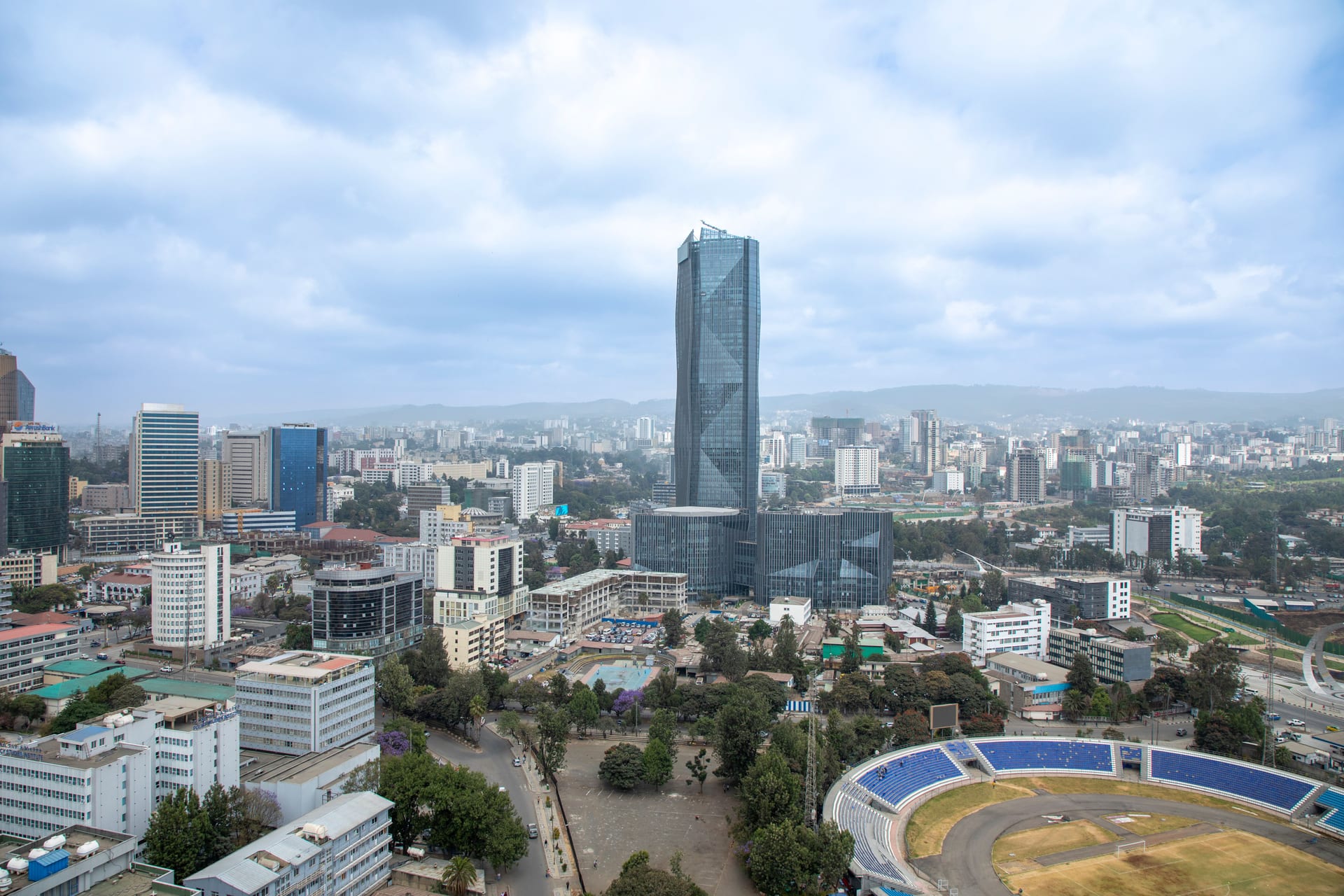
large cityAddis sprawls low and wide rather than rising into a dense core, and getting around relies heavily on cars and minibuses. Walkability is patchy, sidewalks unreliable, and many neighbourhoods feel like works in progress. Construction is everywhere, with new towers going up beside informal housing.
Public life & spaces
22/100Addis runs on dust and scaffolding, upkeep patchy across a city in permanent construction, with public space limited to a few new boulevards and squares in a car-dependent grid. Cared-for shared space is thin. But living here is very cheap, and the café and live-music culture is lively and costs almost nothing.
Safety
38/100Safety is a serious consideration. A homicide rate of about 9 per 100,000 sits well above the corpus norm, while violent and petty crime indicators are elevated and walking at night is not comfortable. Traffic is another major hazard, and political stability is exceptionally weak, so risk is not limited to street crime.
Healthcare
29/100Healthcare is the city's weak spot. Public facilities are stretched, specialist and emergency care is unreliable, and serious cases often mean travelling abroad. Private clinics serve the expat and diplomatic community and some staff speak English, but doctor availability is thin across the board.
Family life
33/100Childcare and domestic help are affordable and easy to arrange, and the highland setting gives kids room to be outdoors. School and healthcare quality are the limiting factors, which is why many foreign families lean on international schools. Suitable family housing exists but takes patience to find.
Career
48/100Local prospects are narrow, and local pay is very low. Low unemployment does not translate into broad opportunity: industry breadth and English-language roles remain limited, while remote-work support is weak. It suits a defined role better than an open-ended job search.
Culture & food
72/100This is the city's strongest hand. Ethiopian food and the coffee ceremony are part of daily life, vegetarian and fasting menus are everywhere, and the cafe culture runs deep in the country that gave the world coffee. A long-rooted local culture sits alongside one of Africa's most international diplomatic communities, with a lively music and art scene.
Ease of integration
56/100Amharic is the language of daily life, and while English is widely used in diplomatic and business circles, getting by locally takes some Amharic. Newcomers find a sizeable, welcoming expat and diplomatic scene that makes landing soft. Ethiopian society is warm but socially traditional, so deeper integration beyond that circle asks for real effort.
Connectivity
25/100Infrastructure is a daily test. Internet is slow and unreliable, power and water cut out, and public transport leans on informal minibuses, though a light rail line exists. The standout is the airport: Ethiopian Airlines makes Addis one of Africa's best-connected hubs, with direct flights across the continent and beyond.
Social values
traditionalEthiopian public life is religious and socially conservative, and attitudes on gender and personal freedom reflect that. LGBTQ residents face a hostile legal and social climate, with same-sex relationships criminalised. The diplomatic presence brings a thread of internationalism, and locals tend to be hospitable to foreigners, but civic trust and everyday orderliness run low.
Relocation ease
31/100Settling in requires patience. Visas and housing are workable, but work authorization, bureaucracy, and banking create a demanding setup. The language barrier and cultural adjustment add to the effort. The tax burden is about 27%, so preparation matters.