
Living in Caracas
Caracas sits in a long valley under the green wall of the Ávila, tropical and warm the year round. Living costs run lower than almost any major Latin American capital, well under Bogotá or Mexico City, but that cheapness is inseparable from the crisis behind it: severe insecurity, a hollowed-out job market, and services that cannot be relied on.
Caracas at a glance
Vital stats
Shown in USD: the local currency (VES) moves too fast for stable monthly figures.
Where Caracas stands out
The metrics where Caracas sits farthest from the middle worldwide, good and bad.
Cheap to arrive, expensive to stay?
A typical one-bedroom in Caracas runs $281/mo. That is beyond the mean net pay of a typical local employee. This is a solo-newcomer stress test: sitting tenants, shared homes, subsidised housing and informal rents are deliberately outside the numerator.
The fastest way to test a shortlist is to go. A week on the ground tells you things no ranking can.
Partner link
Approved language-learning and international money resources for practical next steps.
Daily life in Caracas
How Caracas scores
Category by category
Affordability
68/100Caracas' open-market one-bedroom rent on a new lease is about $281 per month. The rent-to-income measure reaches its 120% ceiling against one typical employee's mean net pay, so the underlying burden may be higher; the band is beyond local pay.
Climate
tropicalWarm temperatures stay fairly even across the year, but Caracas is much wetter and greyer than the temperature alone suggests. It has 116 bright days and 165 grey, rainy days, with muggy conditions affecting most of the year. There is no cold winter, yet persistent humidity and cloud are the real daily trade-off.
Nature access
alpineGeography is kind to Caracas. El Ávila rises straight off the city's northern edge, putting serious hiking and mountain trails within reach in a way Bogotá and Mexico City can't match, and the Caribbean coast lies just over the ridge. Inside the city, green space and parks are thinner on the ground, and rivers barely figure, so the outdoors here is mostly about getting up and out.
Urban form
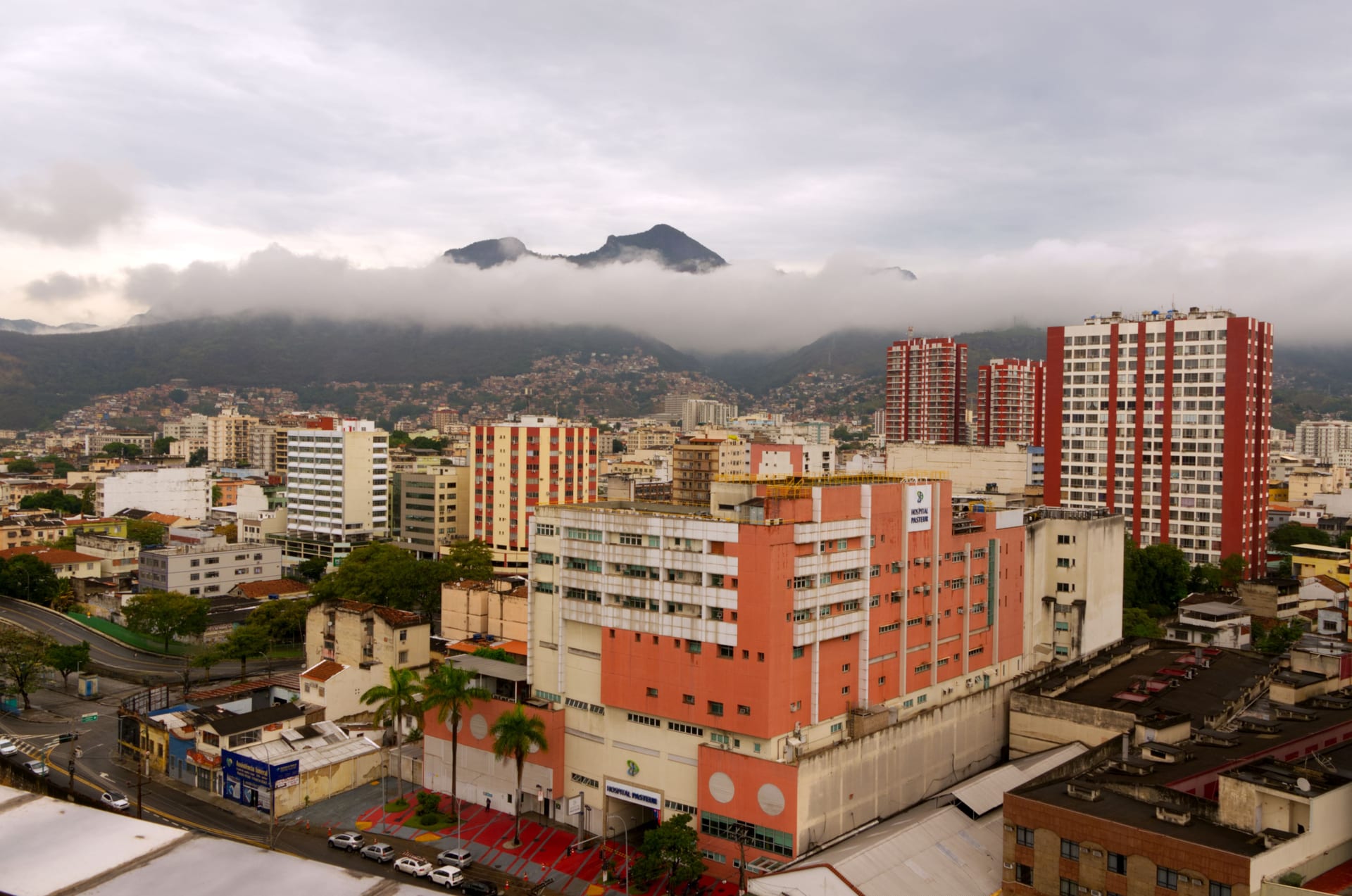
large cityThe city stretches along its valley as a dense, car-leaning sprawl of towers, highways, and hillside barrios. Walkability is modest and uneven, neighbourhood quality varies sharply block to block, and getting around without a car is harder than in most Colombian cities. The pace is busy but not frantic, calmer than Bogotá or Mexico City.
Public life & spaces
30/100Caracas is crisis-hit and neglected, its infrastructure decaying and upkeep scarce. There are still plazas and parks, but they show the strain of years without maintenance. Living is cheap if you hold dollars, yet the instability bites and facilities are scarce, so the free, outdoor life comes hedged with real uncertainty.
Safety
14/100This is the defining weakness, and it has to be stated plainly. Caracas carries one of the worst violent-crime burdens of any city in this set, with night safety at the floor and perceived safety below even Bogotá or Mexico City. Residents organise their daily lives around avoiding risk, and many areas are off-limits after dark. No other factor here outweighs this one.
Healthcare
24/100Healthcare is a serious concern. Public hospitals have been hollowed out by years of crisis, with shortages of staff, medicine, and equipment, and emergency care can't be counted on the way it can in Bogotá or Panama City. Private clinics exist and are better, but they shift the cost onto the patient, and finding English-speaking care is harder than across the region.
Family life
33/100For families, the obstacles stack up. Child safety scores at the bottom of the regional range, schools and childcare trail Colombian and Panamanian peers, and the work-life and outdoor-childhood picture is constrained by the wider insecurity. Families who manage tend to lean on private schooling and tightly managed routines rather than the open street life children have elsewhere.
Career
20/100The local career market is severely constrained, with little industry breadth and few English-language or startup opportunities. Local pay is among the lowest in the comparison, and remote work is not an easy substitute. Unemployment is around 5%, but the deeper issue is the lack of reliable routes into work, making outside income especially important.
Culture & food
44/100Culture is one of the brighter notes. Caracas has a real music and arts pulse, a strong sense of its own identity, and a dining and nightlife scene that holds its own even if it doesn't reach the depth of Mexico City or Bogotá. The international crowd is small and vegan options limited, but the homegrown culture runs deep.
Ease of integration
41/100Venezuelans are warm and sociable, and newcomers who speak Spanish find people genuinely open. That said, English goes only so far, and the foreign community is small, so building a local circle really hinges on the language. Social attitudes lean fairly traditional, and civic trust is low after years of hardship, which can make integration slower than the surface friendliness suggests.
Connectivity
17/100Infrastructure is a daily friction. Power and water cannot be relied on, with outages a recurring fact of life, and public transport, cycling provision, and the airport's reach all trail regional peers. There are no intercity trains, and connectivity, while present, sits well below what the wider region offers. Traffic, at least, is no worse than Bogotá or Mexico City.
Social values
traditionalSocial attitudes run more traditional and less liberal than in Bogotá or Mexico City, with LGBTQ acceptance and gender-equality measures sitting toward the lower end of the regional range. Caraqueños are reasonably open to foreigners, but the broader culture is conservative, and civic trust has been worn thin by years of political and economic strain.
Relocation ease
39/100Settling in is hard work. Visas and work authorization are tougher than in Colombia or Panama, bureaucracy and banking are slow and frustrating, and the cultural adjustment is steeper than the regional norm. Spanish is close to essential. None of it is insurmountable, but the friction is real and the support infrastructure for newcomers is thin.
The trade-offs
A year in Caracas
Apr peaks around 30°C, Dec days top out near 28°C, and the year brings roughly 116 bright days.
Can you actually move here?
The hard limits people most often bring to a move, scored against Caracas's data.
Moving with a pet
Bringing a pet to Caracas is moderately involved, neither the smoothest nor the most demanding move in the region. Expect standard vaccination records and import paperwork, and given the wider strain on services and supplies, line up vet care and basic provisions well in advance.
Who Caracas works for
Answer the questionnaire and see where Caracas lands for you.
Take the free questionnaireWhere else to look
Caracas vs. comparable cities


Objective scores (0–100) for Caracas and its 4 nearest comparable cities.
The cities people weigh against Caracas
Unexpected siblings
Far from Caracas on the map, close across all 14 categories of daily life.
