Affordability
73/100Cluj-Napoca's open-market one-bedroom rent on a new lease is about $589 per month. That is roughly 44% of one typical employee's mean net pay, a rent burden labelled tight alone.
Climate
continentalCluj-Napoca has cold winters, with January averaging -0.1°C, and mild summers that avoid the worst heat. The year is close to the corpus median for bright days but brings a slightly higher share of rainy-grey conditions, while winter brightness remains limited. Severe-weather risk is low, though air quality is somewhat dirtier than the corpus median.
Nature access
alpineThere is no coast anywhere near, so anyone wanting the sea will be disappointed. What Cluj offers instead sits inland and uphill: forests, hiking, and the Apuseni mountains within easy weekend reach. The city's own parks and green space are thinner on the ground, but the surrounding hills do the heavy lifting.
Urban form
mid-sizedA compact, walkable city rather than a sprawling metro, easy to cross on foot through the old centre. Neighbourhoods and mixed-use streets are decent if not remarkable, and car dependency stays manageable by Romanian standards. The overall feel is small-scale and relaxed, lighter on bustle than Bucharest.
Public life & spaces
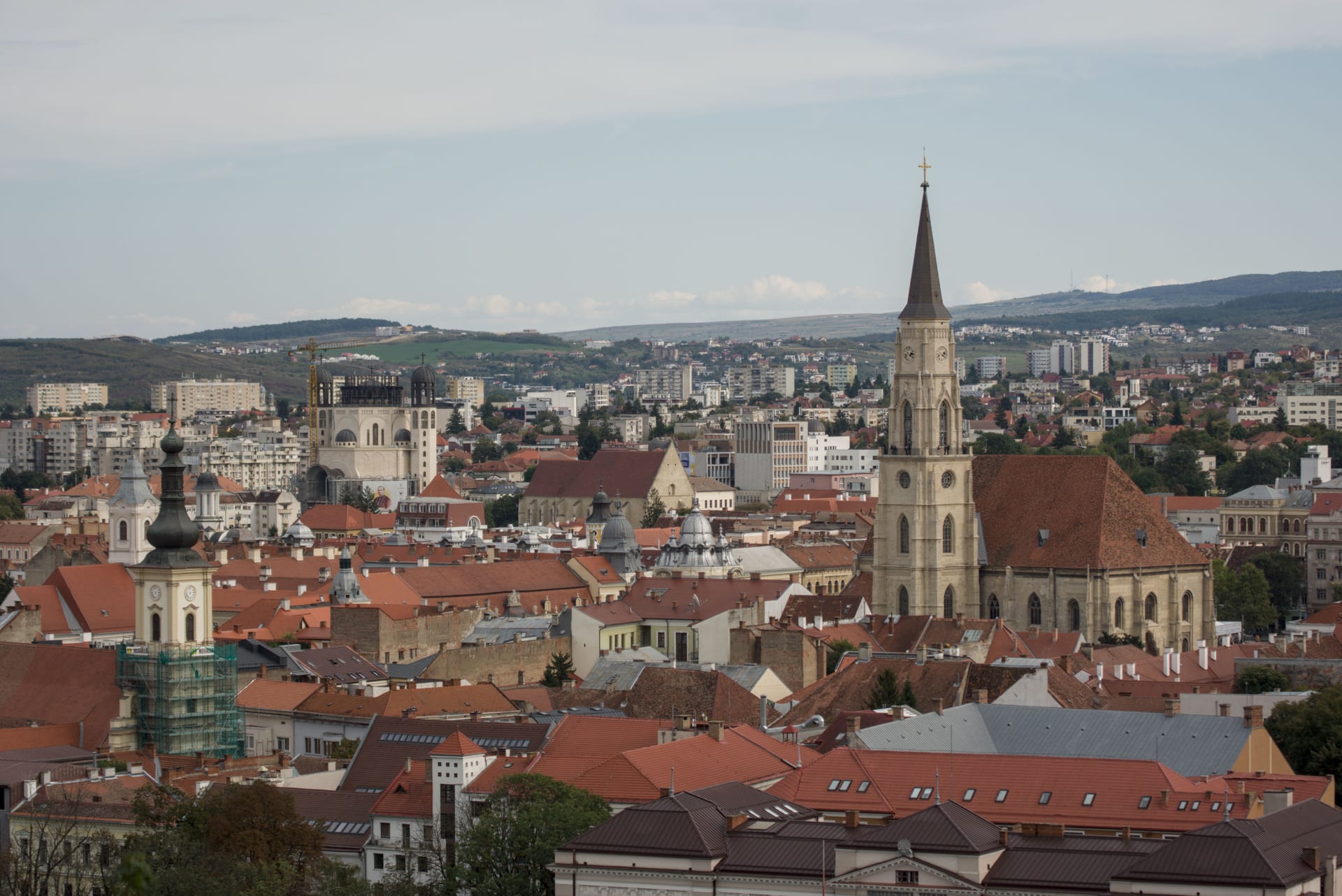
63/100Cluj-Napoca is tidier than Bucharest, with a decent centre and walkable historic core around Union Square, though neglect shows at the edges. The built realm is pleasant if modest. As a student city it runs cheap, with festivals like Untold and plenty of free culture.
Safety
76/100One of Cluj's quiet strengths. Violent crime is rare, the streets feel secure after dark, and everyday petty crime stays low. Romania's broader political picture is steadier than its reputation suggests, and on a day-to-day level the city reads as calm and orderly.
Healthcare
56/100Workable but middling. Cluj has a strong medical university and reasonable hospital access, yet doctor availability is stretched and the public system can frustrate. Many residents lean on private clinics, which are affordable by Western standards. English in medical settings is hit or miss outside the larger practices.
Family life
56/100A sound place to raise children, with good child safety, generous parental leave norms, and the outdoors close at hand. School quality and childcare availability are more uneven, and families wanting larger housing will find options tighter than the low rents first suggest. Work-life rhythm is humane rather than demanding.
Career
61/100Cluj-Napoca has a relatively strong technology-oriented labour market, with English-language roles and remote work both well supported. Unemployment is 6%, so the tech profile does not cover every sector. Local pay is modest, making the city more compelling for career access than for high local earnings.
Culture & food
65/100Punches above its size thanks to the student population. Cafes and nightlife are the standouts, with a respectable music and arts scene and a genuine local food culture. International dining and vegan options are present but not deep. For its scale, Cluj keeps the calendar lively without trying to be Bucharest.
Ease of integration
56/100Romanian is the working language, with Hungarian widely spoken given Transylvania's history and English common among the young and the tech crowd. Newcomers find the city reasonably open, and the student and expat tech scene makes it easier than most Romanian cities to build a circle. Deeper local ties still ask for some Romanian and patience.
Connectivity
52/100Solid digital connectivity and dependable utilities anchor the basics, and the airport links Cluj to a fair spread of European cities. The weaker spots are mobility and rail: cycling infrastructure is thin and intercity train connections are slow, so getting around Romania by rail tests the patience.
Social values
mixedRomania leans traditional and socially conservative, and Cluj, despite its student energy, reflects that. Secular public life, social liberalism, and LGBTQ acceptance lag behind Western Europe. The city is more open to outsiders than the countryside, but newcomers from more progressive places should expect a more conservative baseline.
Relocation ease
56/100Moderate friction overall. Visa and work authorisation are manageable, especially for EU citizens, and cultural adjustment is gentle. The sticking point is bureaucracy, which remains paper-heavy and slow, and the language barrier in admin offices, where Romanian is often the only option. Day-to-day setup gets easier once the initial paperwork clears.