
Living in Bucharest
Bucharest combines a broad, English-friendly labour market with warm summers and cold winters. Local pay is modest, so the city offers more employment breadth than income height. The year is often bright, but winter remains noticeably dim. It suits residents who value opportunity and a large-city setting.
Bucharest at a glance
Vital stats
Shown in USD: the local currency (RON) moves too fast for stable monthly figures.
Where Bucharest stands out
The metrics where Bucharest sits farthest from the middle worldwide, good and bad.
Cheap to arrive, expensive to stay?
A typical one-bedroom in Bucharest runs $699/mo. That is ~61% of one typical local employee’s mean net pay. This is a solo-newcomer stress test: sitting tenants, shared homes, subsidised housing and informal rents are deliberately outside the numerator.
The fastest way to test a shortlist is to go. A week on the ground tells you things no ranking can.
Partner link
Approved language-learning and international money resources for practical next steps.
Daily life in Bucharest
How Bucharest scores
Category by category
Affordability
70/100Bucharest's open-market one-bedroom rent on a new lease is about $699 per month. That is roughly 61% of one typical employee's mean net pay, a rent burden labelled sharing likely.
Climate
temperateBucharest has warm summers and cold winters, with July averaging 24.6°C and January 1.5°C. Rainy-grey days are relatively limited, though winter brightness remains low and air quality is middling. Extreme-weather exposure is middling, so the real adjustment is seasonal rather than dramatic storms.
Nature access
leafyGreen space inside the city is thin, and there is no coastline within easy reach. Weekends compensate: the Carpathians and their forests, lakes, and hiking trails are a manageable drive north, and the Black Sea coast is reachable for a longer trip. Day to day, the urban greenery is modest rather than generous.
Urban form
large cityThis is a sprawling, car-leaning capital where wide socialist-era avenues meet older quarters and dense apartment blocks. Central districts are walkable enough, but neighbourhood quality and the suburbs are uneven, and traffic shapes daily life. The pace is middling, busier than smaller Romanian cities yet calmer than the continent's largest metros.
Public life & spaces
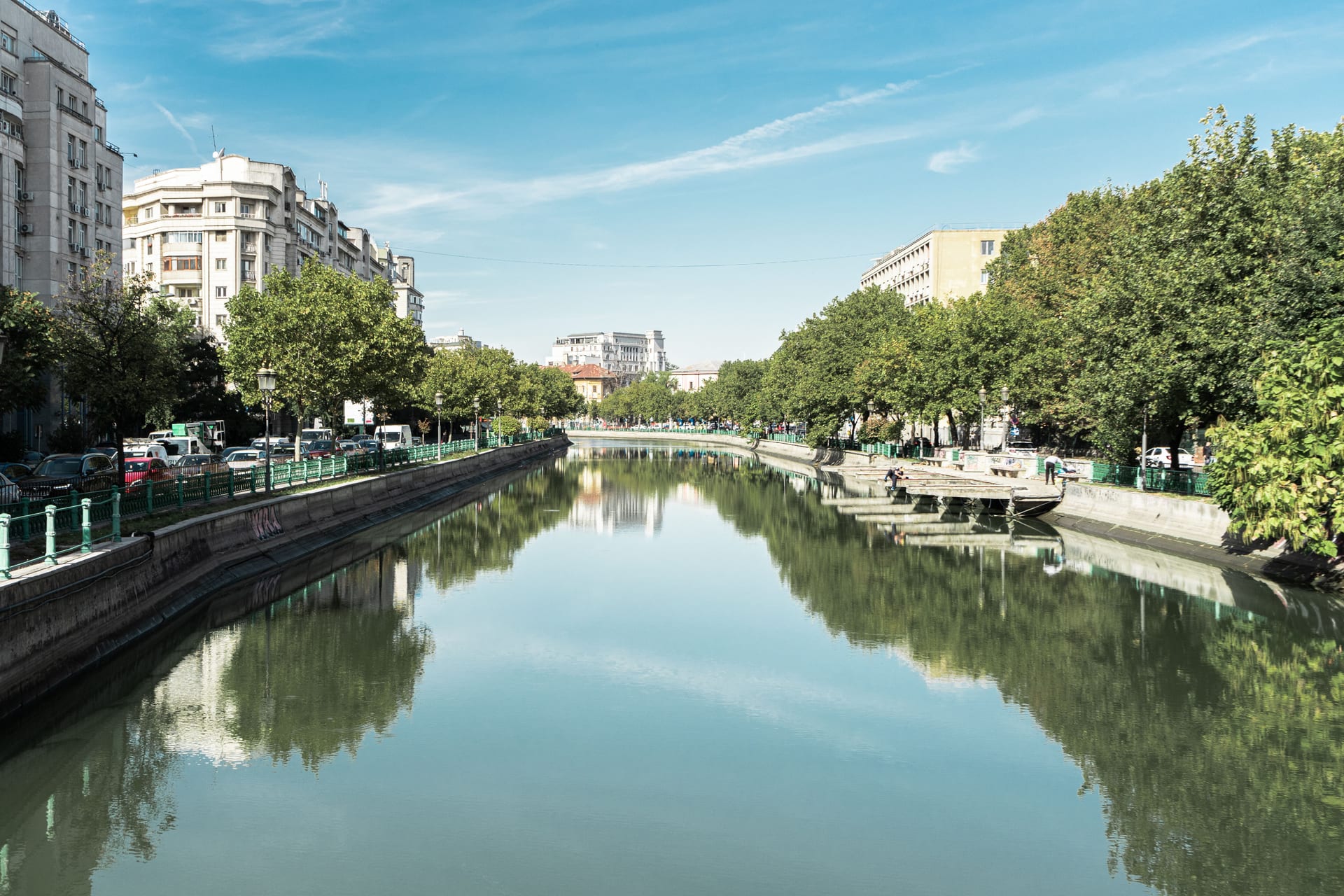
48/100Bucharest is chaotic and grimy, upkeep uneven and grime collecting along its grand socialist boulevards. Public space is vast but patchy — wide avenues and big parks, fewer truly inviting plazas. What redeems it is cost: the city is very cheap, its nightlife and events largely free.
Safety
68/100Serious violent crime is rare, and Bucharest reads as a safe place by most measures, including after dark. Pickpocketing and opportunistic theft turn up in crowded spots, as in any large capital, so ordinary caution applies. Political stability is reasonable without being rock-solid by Western European standards.
Healthcare
54/100Healthcare is the weaker side of the ledger. The public system is underfunded and access can be slow, which pushes many residents and expats toward private clinics, where costs stay relatively low and English is more often available. Quality varies sharply between facilities, so where care is sought matters.
Family life
51/100Bucharest works for families on the basics, with decent child safety, parks, and a generous parental-leave framework by regional standards. Schools and childcare are middling and uneven in quality, so families often shop around or lean on private options. Family-sized housing is affordable, which eases one of the bigger pressures elsewhere.
Career
63/100Bucharest has a relatively broad local job market, with good English-language coverage and strong support for remote work. Unemployment is 6%, so finding work is not frictionless, but the city's scale and industry breadth help. Local pay is on the low side, the clear trade-off behind its otherwise useful career access.
Culture & food
71/100Nightlife is the headline here, livelier and later than in most cities its size, with a dense run of bars and clubs in the old town. Restaurants, cafes, and a hearty local food scene round it out, alongside a respectable spread of museums and music. The international crowd is growing but still smaller than in Western capitals.
Ease of integration
56/100Romanian is the daily language, and learning some opens doors, though English goes a long way in business and among younger residents. Locals are reasonably welcoming to newcomers, but the international community is modest, so building a circle takes effort beyond the expat bubble. Social attitudes lean traditional, which can slow integration for some.
Connectivity
52/100The metro and buses cover the core well and digital connectivity is strong, a real plus for remote work. Less impressive: cycling infrastructure is thin, intercity rail is slow and dated, and bureaucracy has been slow to digitize. Road congestion is a daily fact of life. Utilities are generally reliable.
Social values
mixedRomania is among the more socially conservative parts of the EU, and Bucharest reflects that. Secular public life, social liberalism, and LGBTQ acceptance score low, and civic trust is fragile after decades of weak institutions. The city is more open and cosmopolitan than the countryside, but progressive newcomers should set expectations accordingly.
Relocation ease
58/100Moving here is moderately straightforward for EU citizens, with manageable visa and work routes, though bureaucracy is a recurring frustration and digitization lags. The language barrier is real outside professional and younger circles. Housing search and banking are workable rather than seamless, and the overall cultural adjustment is gentle for most.
The trade-offs
A year in Bucharest
Aug peaks around 32°C, Jan days top out near 5°C, and the year brings roughly 224 bright days.
Can you actually move here?
The hard limits people most often bring to a move, scored against Bucharest's data.
Moving with a pet
Bringing a pet to Bucharest is comparatively easy: as an EU member, Romania follows standard pet-passport and microchip-and-vaccination rules, so a move from within Europe is low-friction with the right paperwork in order.
Who Bucharest works for
Answer the questionnaire and see where Bucharest lands for you.
Take the free questionnaireWhere else to look
Bucharest vs. comparable cities


Objective scores (0–100) for Bucharest and its 4 nearest comparable cities.
The cities people weigh against Bucharest
Unexpected siblings
Far from Bucharest on the map, close across all 14 categories of daily life.


