
Living in Sofia
Bulgaria's capital sits at the foot of Vitosha mountain, and that proximity shapes daily life as much as the city itself. It is the cheapest of the major Central and Eastern European capitals to live in, noticeably less polished than Prague or Budapest but a fraction of the cost. Expect a working capital still finding its footing, with the trade-offs that come with that.
Sofia at a glance
Vital stats
Shown in USD: the local currency (EUR) moves too fast for stable monthly figures.
Where Sofia stands out
The metrics where Sofia sits farthest from the middle worldwide, good and bad.
Cheap to arrive, expensive to stay?
A typical one-bedroom in Sofia runs $540/mo. That is ~48% of one typical local employee’s mean net pay. This is a solo-newcomer stress test: sitting tenants, shared homes, subsidised housing and informal rents are deliberately outside the numerator.
The fastest way to test a shortlist is to go. A week on the ground tells you things no ranking can.
Partner link
Approved language-learning and international money resources for practical next steps.
Daily life in Sofia
How Sofia scores
Category by category
Affordability
75/100Sofia's open-market one-bedroom rent on a new lease is about $540 per month. That is roughly 48% of one typical employee's mean net pay, a rent burden labelled tight alone.
Climate
continentalSofia's winter is genuinely cold, averaging -0.4°C in January, while summers stay warm rather than oppressive. Bright days are relatively common and rainy-grey days are limited, but winter brightness is still weak. Air quality is the harder trade-off, at roughly 23 µg/m³, while severe-weather risk remains low.
Nature access
alpineThe mountains are the headline. Vitosha rises straight off the southern edge of the city, putting serious hiking and weekend trails within reach in a way few European capitals can match. Forests and national parks are close too. What is missing is water: no coast, few lakes or rivers, and green space inside the city is thinner than the surrounding wilderness would suggest.
Urban form
large citySofia is a mid-sized capital with a walkable core but a patchier feel as you move outward. Neighbourhood quality and the suburbs are uneven, and the mix of housing and street life is decent without rivalling Prague or Budapest. The pace is moderate, neither frantic nor sleepy, and car dependency creeps in beyond the centre.
Public life & spaces
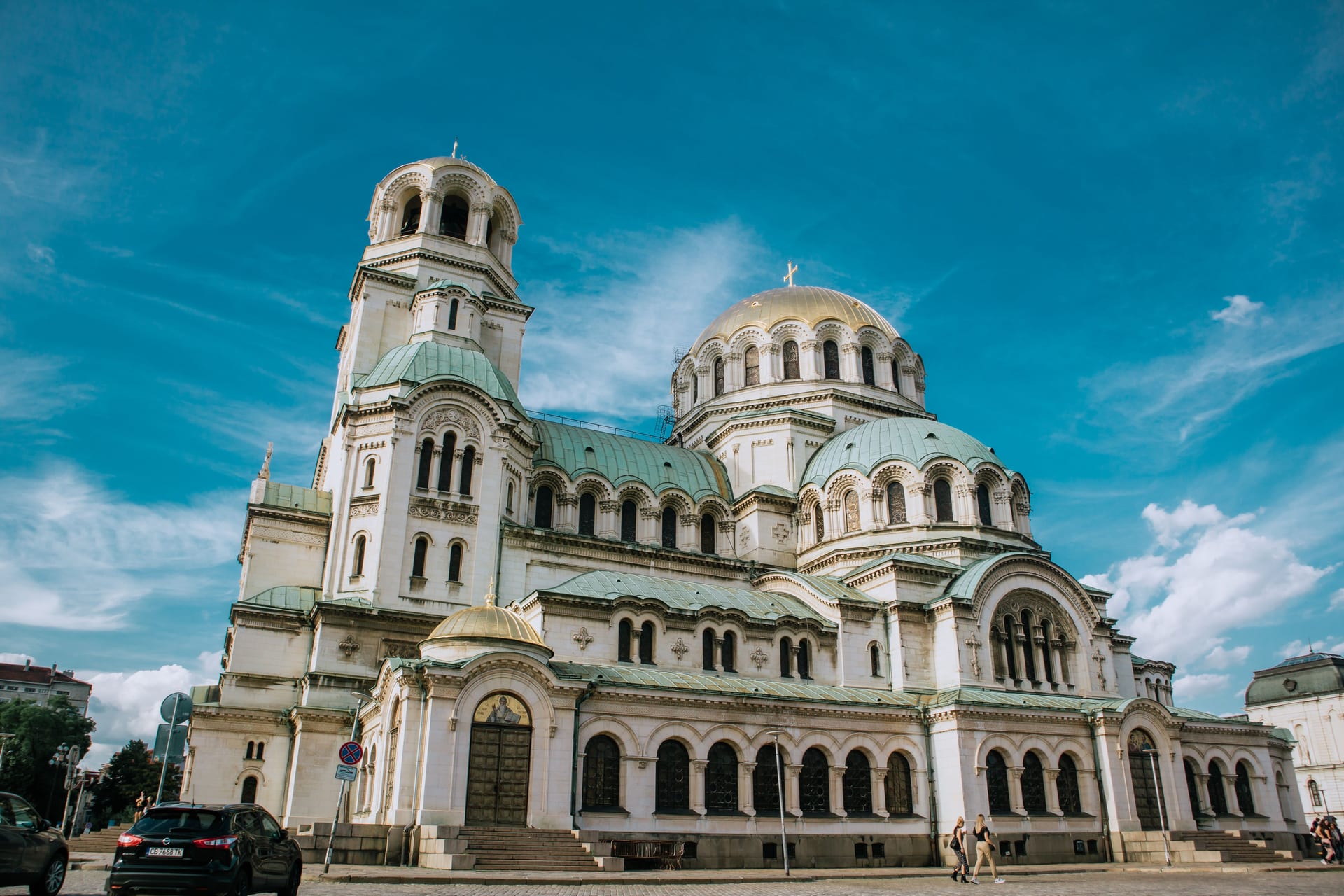
52/100Sofia has rough edges — uneven pavements, grime, patchy upkeep — and its squares and Vitosha boulevard feel worn despite handsome churches. Cared-for public space is thin on the ground. But it is the cheapest EU capital by far, and daily life here is lived cheaply and outdoors.
Safety
68/100Sofia is a safe city by most measures. Serious violent crime is very rare, traffic safety is solid, and walking around feels comfortable day to day. Petty crime and street-level wariness sit slightly above the calmest Central European capitals, and political stability is steady rather than rock-solid, but nothing here should give a newcomer pause.
Healthcare
57/100Healthcare is the soft spot. Quality and hospital standards trail Prague, Budapest, and especially Western European capitals, and finding English-speaking doctors takes more effort than in most peer cities. Public emergency care is workable, and many residents lean on private clinics, which stay affordable given the cost of living. Plan to navigate the system actively rather than assume it.
Family life
53/100For families, Sofia is workable rather than outstanding. Parental leave provisions are generous by regional standards, and child safety is reasonable. Schools, childcare, and playgrounds sit in the middle of the pack, generally a notch below Budapest or Berlin. The real draw for kids is the outdoors, with the mountain and parks giving an easy outlet on weekends.
Career
59/100Sofia's local market is modest, with limited industry breadth and professional-network depth. Unemployment is low at 3.5%, and English-language roles offer a practical opening, while remote work remains an option. Local pay is on the low side, so the city's career case rests more on outside income than local earning power.
Culture & food
68/100Sofia's cultural life is solid without being a major draw. Local Bulgarian culture and food traditions run deep, and there is a steady supply of restaurants, cafes, and nightlife, though the breadth falls short of Prague or Budapest. The international community and the music and arts scene are still modest, and getting by without some Bulgarian limits how much of it opens up.
Ease of integration
44/100Bulgarian is the language of daily life, written in Cyrillic, and that is a real barrier at first. English is common among younger people and in professional circles, and Russian is widely understood. Local society leans traditional and is only moderately oriented toward newcomers, so building a circle takes patience and effort, though the smaller expat scene means connections, once made, tend to stick.
Connectivity
48/100Infrastructure is functional but behind the regional front-runners. The metro and public transport cover the centre adequately, utilities are reliable enough, and the airport handles decent connections. Cycling infrastructure is poor, intercity rail is slow, road congestion bites, and dealing with public administration still involves a lot of paper. Broadband, at least, is fast and cheap.
Social values
mixedThis is a socially conservative city. Attitudes on gender, LGBTQ acceptance, and diversity sit well below most EU capitals, and traditional and religious currents run stronger here than in Prague, Lisbon, or Berlin. Public life is broadly secular, but newcomers from more liberal places, and LGBTQ residents in particular, should go in clear-eyed about the prevailing climate.
Relocation ease
56/100Moving here is comparatively smooth on paper. Visa and work-authorisation paths are manageable for an EU capital, the tax system is simple, and finding housing is easier than in tighter markets like Berlin or Lisbon. The friction is the Cyrillic-script language barrier and slow, paperwork-heavy bureaucracy, which test patience during the first months of settling in.
The trade-offs
A year in Sofia
Jul peaks around 27°C, Jan days top out near 4°C, and the year brings roughly 213 bright days.
Can you actually move here?
The hard limits people most often bring to a move, scored against Sofia's data.
Moving with a pet
Bringing a pet to Sofia is straightforward. As an EU member, Bulgaria follows the standard pet-travel rules, so a microchip, rabies vaccination, and EU pet passport or health certificate cover most arrivals with little added hassle.
Who Sofia works for
Answer the questionnaire and see where Sofia lands for you.
Take the free questionnaireWhere else to look
Sofia vs. comparable cities


Objective scores (0–100) for Sofia and its 4 nearest comparable cities.
The cities people weigh against Sofia
Unexpected siblings
Far from Sofia on the map, close across all 14 categories of daily life.


