
Living in Dhaka
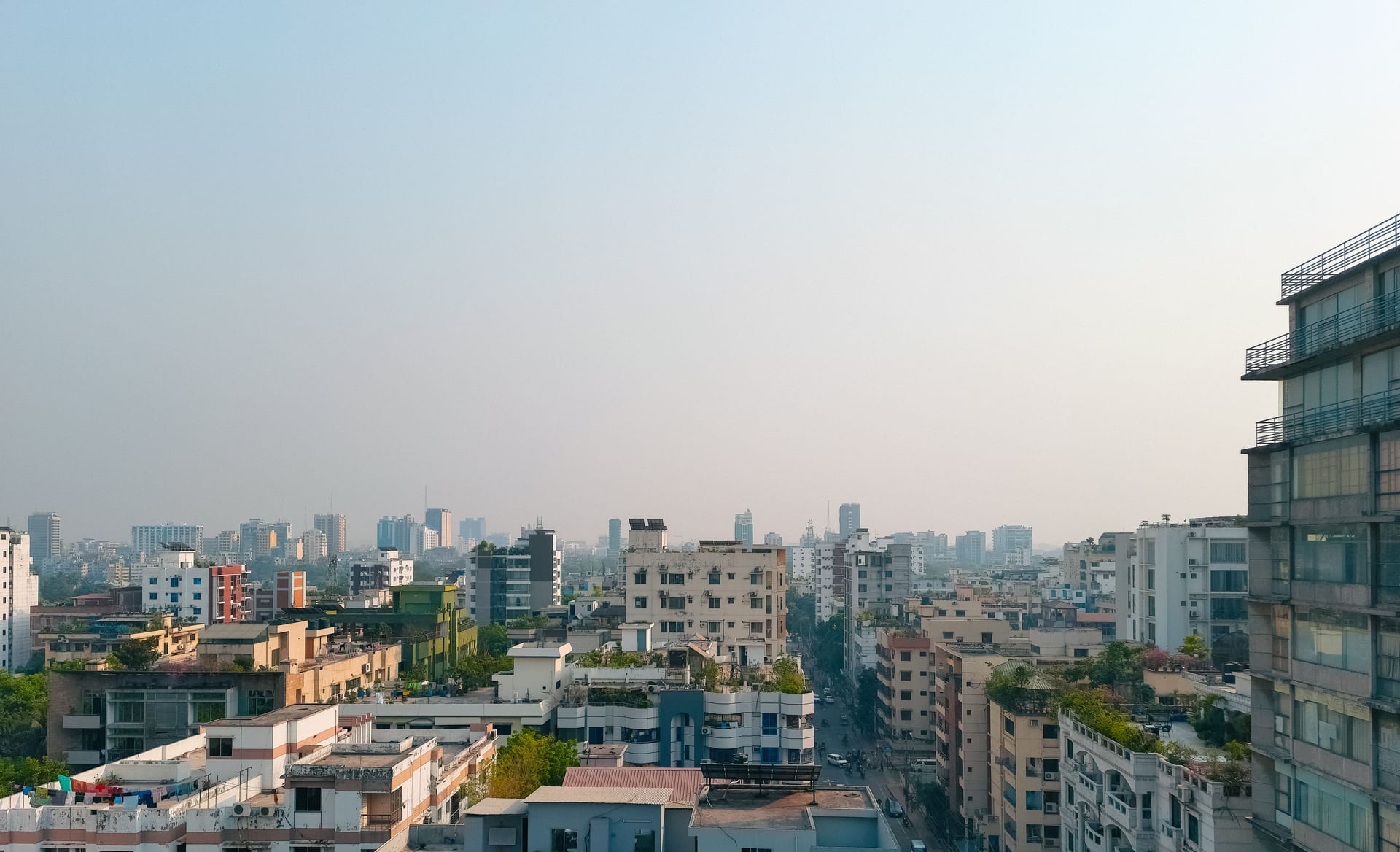
Bangladesh's capital is one of the densest, most intense cities on earth: famously cheap to live in, relentlessly crowded, and gridlocked in a way that makes even Manila feel orderly. Daily life is loud, warm, and human, but the air quality and infrastructure ask a lot of anyone arriving from a calmer place.
Dhaka at a glance
Vital stats
Shown in USD: the local currency (BDT) moves too fast for stable monthly figures.
Where Dhaka stands out
The metrics where Dhaka sits farthest from the middle worldwide, good and bad.
Cheap to arrive, expensive to stay?
A typical one-bedroom in Dhaka runs $231/mo. That is beyond the mean net pay of a typical local employee. This is a solo-newcomer stress test: sitting tenants, shared homes, subsidised housing and informal rents are deliberately outside the numerator.
The fastest way to test a shortlist is to go. A week on the ground tells you things no ranking can.
Partner link
Approved language-learning and international money resources for practical next steps.
Daily life in Dhaka
How Dhaka scores
Category by category
Affordability
72/100Dhaka's open-market one-bedroom rent on a new lease is about $231 per month. The rent-to-income measure reaches its 120% ceiling against one typical employee's mean net pay, so the underlying burden may be higher; the band is beyond local pay.
Climate
tropicalDhaka has a short, mild winter, but the rest of the year is hot and humid, with muggy conditions on most days. Air quality is a serious daily drawback, and the city's high extreme-weather exposure adds a second climate risk. There is still enough seasonal light to keep the sky from feeling permanently dim.
Nature access
urbanGreen space is scarce here, among the lowest of any city in the comparison set. Built-up almost wall to wall, Dhaka has few real parks and little room to run or cycle. The rivers that ring the city are a defining feature, but ocean, hills and proper hiking are all a long haul away, and weekend escapes into nature take real effort.
Urban form
megacityDhaka is a vast, extremely dense metropolitan area, with roughly 37 million people across the metro and about 30,000 residents per square kilometre in the core. Street life is intense, while limited walking conditions, scarce housing space and congested car travel make everyday movement demanding.
Public life & spaces
11/100Dhaka is overwhelming — extreme density, garbage and gridlocked traffic make for dire upkeep, and genuine shared public space is almost absent. Living costs are rock-bottom, but congestion and the lack of free amenities mean enjoyment is hard-won; the street is busy, not pleasant. Cheapness here is the only real upside.
Safety
53/100Violent crime is comparatively low, with a homicide rate below Manila and roughly in line with Bangkok, so on paper the city is safer than its chaos suggests. Petty theft and street hassle are more common, though, and perceived safety after dark is middling. The real daily danger is the roads, where traffic fatalities are high, and the political backdrop has been unstable.
Healthcare
33/100Healthcare is a genuine weak spot. Public facilities are stretched, doctor availability is among the lowest measured, and emergency care can be unreliable. Private clinics serving the better-off offer decent everyday care at low cost, and English is reasonably common in those settings, but anyone facing a serious illness often travels abroad, frequently to Bangkok or Indian metros.
Family life
26/100For families, Dhaka is a mixed and largely challenging picture. Domestic help and childcare are cheap and easy to arrange, which eases daily logistics. But schools, child safety, playgrounds and outdoor space all score low, the work culture leaves little time, and the air quality is a real worry for raising young children. International schools exist mainly for expat and elite families.
Career
40/100Building a local career in Dhaka is difficult for newcomers. The market is narrow, English-language roles and remote-work support are limited, and local pay is very low. Some opportunities exist, but the broader professional network remains thin.
Culture & food
42/100Local culture runs deep and proud, and Bengali food, sweets and street eats are a real draw. The restaurant and arts scene is modest rather than world-class, and nightlife is very limited in this largely conservative, Muslim-majority city, far quieter after dark than Bangkok. The international community is small, so expat life leans heavily on local rhythms and hospitality.
Ease of integration
41/100Bengali is the language of daily life, and warmth toward outsiders is genuine, with openness to foreigners on par with Bangkok. English goes a fair way in business and educated circles, which softens the entry. Still, the foreign community is small and social life is built around family, faith and neighbourhood, so integrating means leaning into local customs rather than an expat bubble.
Connectivity
17/100Infrastructure is one of Dhaka's hardest realities. Road congestion is among the worst anywhere, public transport is limited despite a new metro line, and power and utilities can be unreliable. Internet is developing rather than fast, cycling is unsafe, and bureaucracy is barely digitised. The airport offers reasonable regional links but trails Bangkok's connectivity by a wide margin.
Social values
traditionalSocially, Dhaka is conservative. Public life is shaped by Islamic norms, social liberalism is low, and LGBTQ acceptance is among the least open in the dataset, with same-sex relations criminalised. Gender roles remain traditional. There is real everyday hospitality toward visitors, and openness to foreigners is decent, but the broader cultural climate is far from the permissiveness of a Berlin or Bangkok.
Relocation ease
41/100Settling in takes patience. Visas and work authorisation are harder to navigate than in much of Southeast Asia, bureaucracy is heavy and largely paper-based, and opening accounts or sorting admin can drag. The language barrier is moderate, since English helps in formal settings, and renting is fairly straightforward, but the overall cultural and administrative adjustment is a steep one for most newcomers.
The trade-offs
A year in Dhaka
Apr peaks around 34°C, Jan days top out near 25°C, and the year brings roughly 182 bright days.
Can you actually move here?
The hard limits people most often bring to a move, scored against Dhaka's data.
Moving with a pet
Bringing a pet is moderately manageable, landing mid-pack overall. Expect import permits, vaccination and health certification, plus limited specialist veterinary care once settled, so line up the paperwork and a trusted vet before the move.
Who Dhaka works for
Answer the questionnaire and see where Dhaka lands for you.
Take the free questionnaireWhere else to look
Dhaka vs. comparable cities


The cities people weigh against Dhaka
Unexpected siblings
Far from Dhaka on the map, close across all 14 categories of daily life.
