
Living in Kathmandu
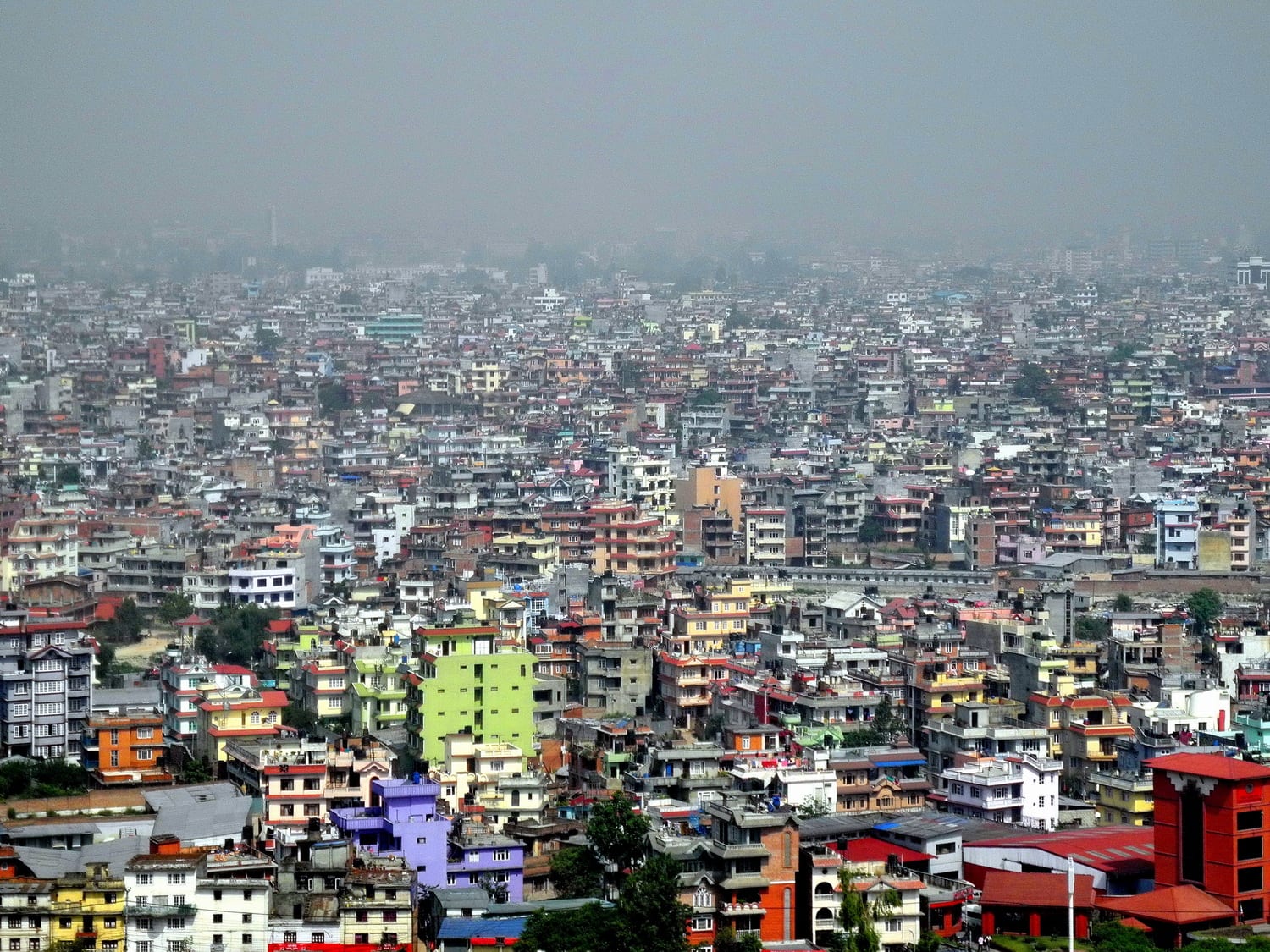
Kathmandu offers mild summers and little seasonal darkness, but frequent rainy-grey days, long muggy stretches, and very poor air quality make the climate demanding. The local market is extremely thin and pay is exceptionally low, so it fits people bringing income from elsewhere more than those relying on local hiring.
Kathmandu at a glance
Vital stats
Shown in USD: the local currency (NPR) moves too fast for stable monthly figures.
Where Kathmandu stands out
The metrics where Kathmandu sits farthest from the middle worldwide, good and bad.
Cheap to arrive, expensive to stay?
A typical one-bedroom in Kathmandu runs $185/mo. That is ~109% of one typical local employee’s mean net pay. This is a solo-newcomer stress test: sitting tenants, shared homes, subsidised housing and informal rents are deliberately outside the numerator.
The fastest way to test a shortlist is to go. A week on the ground tells you things no ranking can.
Partner link
Approved language-learning and international money resources for practical next steps.
Daily life in Kathmandu
How Kathmandu scores
Category by category
Affordability
73/100Kathmandu's open-market one-bedroom rent on a new lease is about $185 per month. That is roughly 109% of one typical employee's mean net pay, a rent burden labelled solo unlikely.
Climate
wet & greyKathmandu avoids severe summer heat, with July averaging about 24°C, but the climate is not easy year-round. Rainy-grey days are frequent, humidity brings a long muggy stretch, and air quality remains a serious drawback.
Nature access
alpineThis is the category where Kathmandu is unmatched. The Himalaya begins at the city's edge, and access to trekking, mountains, forest, and national parks is about as good as it gets on the planet. The trade-off is inside the city itself, where green parks are scarce and there is no coast within reach.
Urban form
large cityKathmandu is a mid-sized, densely packed city rather than a sprawling megacity like Bangkok or Manila. Streets are tight, often unpaved at the edges, and built for getting by rather than for strolling, so walkability is poor and a vehicle helps. The overall pace stays calmer than the region's largest hubs.
Public life & spaces
26/100Kathmandu wears its dust, pollution and post-quake disrepair openly, with garbage a constant. Built public space is cramped beyond the Durbar Square temple plazas, which remain extraordinary. But life is very cheap and steeped in living heritage — free temples, courtyards and near-constant festivals carry the daily pleasure here.
Safety
56/100Violent crime is low and most residents feel safe day to day, with homicide rates well below Manila and on par with Colombo. The real hazards are on the road, where traffic is chaotic and dangerous, and in the background, where political stability has been shaky and protests are not rare.
Healthcare
35/100Healthcare is one of Kathmandu's weakest points. Doctors are in short supply, hospital quality trails regional peers like Bangkok and Colombo, and emergency care is unreliable, with serious cases often sent abroad. Care is at least inexpensive, and private clinics serving foreigners tend to have English-speaking staff.
Family life
33/100For families, Kathmandu is a mixed bag that leans difficult. Schools and playgrounds are limited, and the broader child-safety picture trails most regional cities. On the better side, childcare is affordable and the working culture leaves more room for family time than in harder-driving capitals like Tokyo or Bangkok.
Career
39/100Kathmandu's local market is very thin, with little industry depth, weak startup activity, and few openings. English-language work exists, but remote options are limited and local pay is exceptionally low. A pre-arranged role or income from elsewhere makes the move far more workable.
Culture & food
72/100Living culture is the city's strongest suit, a dense layer of temples, courtyards, and ritual woven into everyday life, easily a match for any city in the region. The food scene leans well toward vegetarian and vegan eating, and there are decent cafes and restaurants. Nightlife stays modest.
Ease of integration
63/100Newcomers tend to find Kathmandu welcoming. Locals are notably open to foreigners, English goes a long way in the city, and the long-running trekker and aid-worker presence means there is a foothold of an expat scene. Society remains fairly traditional, so deeper integration rewards learning some Nepali and patience with local customs.
Connectivity
18/100Infrastructure is a daily friction here. Public transport is informal and limited, there are no intercity trains, internet is slow and patchy, and power and water can be unreliable. The international airport offers reasonable regional links but less reach than Bangkok or Manila, and getting official paperwork done online is mostly not an option.
Social values
mixedSocially, Kathmandu sits in the middle of the regional pack and skews traditional. Religion is woven into public life, and gender norms remain conservative, though attitudes toward LGBTQ people are comparatively relaxed for the region, and Nepal has been ahead of many neighbours on legal recognition. Openness to outsiders is a genuine bright spot.
Relocation ease
42/100Settling in takes effort. Visa and work-authorization routes are restrictive, with none of the digital-nomad or retiree pathways that Colombo or Manila offer, and bureaucracy and banking are slow and paper-heavy. The upside is that English smooths a lot of the way, and the culture is welcoming enough that the social side of adjusting is easier than the administrative side.
The trade-offs
A year in Kathmandu
Jun peaks around 26°C, Jan days top out near 15°C, and the year brings roughly 136 bright days.
Can you actually move here?
The hard limits people most often bring to a move, scored against Kathmandu's data.
Moving with a pet
Bringing a pet to Kathmandu is moderately manageable: expect import permits, vaccination records, and a health certificate, but no lengthy quarantine in normal cases. Allow time for paperwork, since the process is more bureaucratic than digital.
Who Kathmandu works for
Answer the questionnaire and see where Kathmandu lands for you.
Take the free questionnaireWhere else to look
Kathmandu vs. comparable cities


The cities people weigh against Kathmandu
Unexpected siblings
Far from Kathmandu on the map, close across all 14 categories of daily life.