
Living in Kyoto
Japan's old capital trades Osaka's neon and Tokyo's scale for temple districts, machiya streets, and a slower rhythm. Daily life is calm, exceptionally safe, and walkable, with food that ranks among the country's best. The catch is a thin foreign community and a real language wall.
Kyoto at a glance
Vital stats
Where Kyoto stands out
The metrics where Kyoto sits farthest from the middle worldwide, good and bad.
Cheap to arrive, expensive to stay?
A typical one-bedroom in Kyoto runs ¥71,446/mo. That is ~25% of one typical local employee’s mean net pay. This is a solo-newcomer stress test: sitting tenants, shared homes, subsidised housing and informal rents are deliberately outside the numerator.
The fastest way to test a shortlist is to go. A week on the ground tells you things no ranking can.
Partner link
Approved language-learning and international money resources for practical next steps.
Daily life in Kyoto
How Kyoto scores
Category by category
Affordability
72/100Kyoto's open-market one-bedroom rent on a new lease is about ¥71,446 per month. That is roughly 25% of one typical employee's mean net pay, a rent burden labelled manageable solo.
Climate
subtropicalSummer is hot and humid in Kyoto, while winters are genuinely cold. The year brings about 183 bright days and 112 rainy-grey days, with a damp, changeable feel around the rainy season. Air quality is a quiet strength.
Nature access
great hikingThe city is ringed by wooded hills, with forest trails, hiking, and mountain temples easy to reach on a free afternoon. Weekend escapes into the countryside come naturally. Inside the city, though, large parks are scarce and green space per resident runs thin, and there is no coastline of its own to speak of.
Urban form
large cityDaily life is exceptionally walkable, with mixed-use neighbourhoods that make errands easy without a car. The city itself has about 1.5 million residents, but the defined metro population is roughly 12.7 million, so the apparent scale changes sharply with the boundary. Homes remain compact.
Public life & spaces
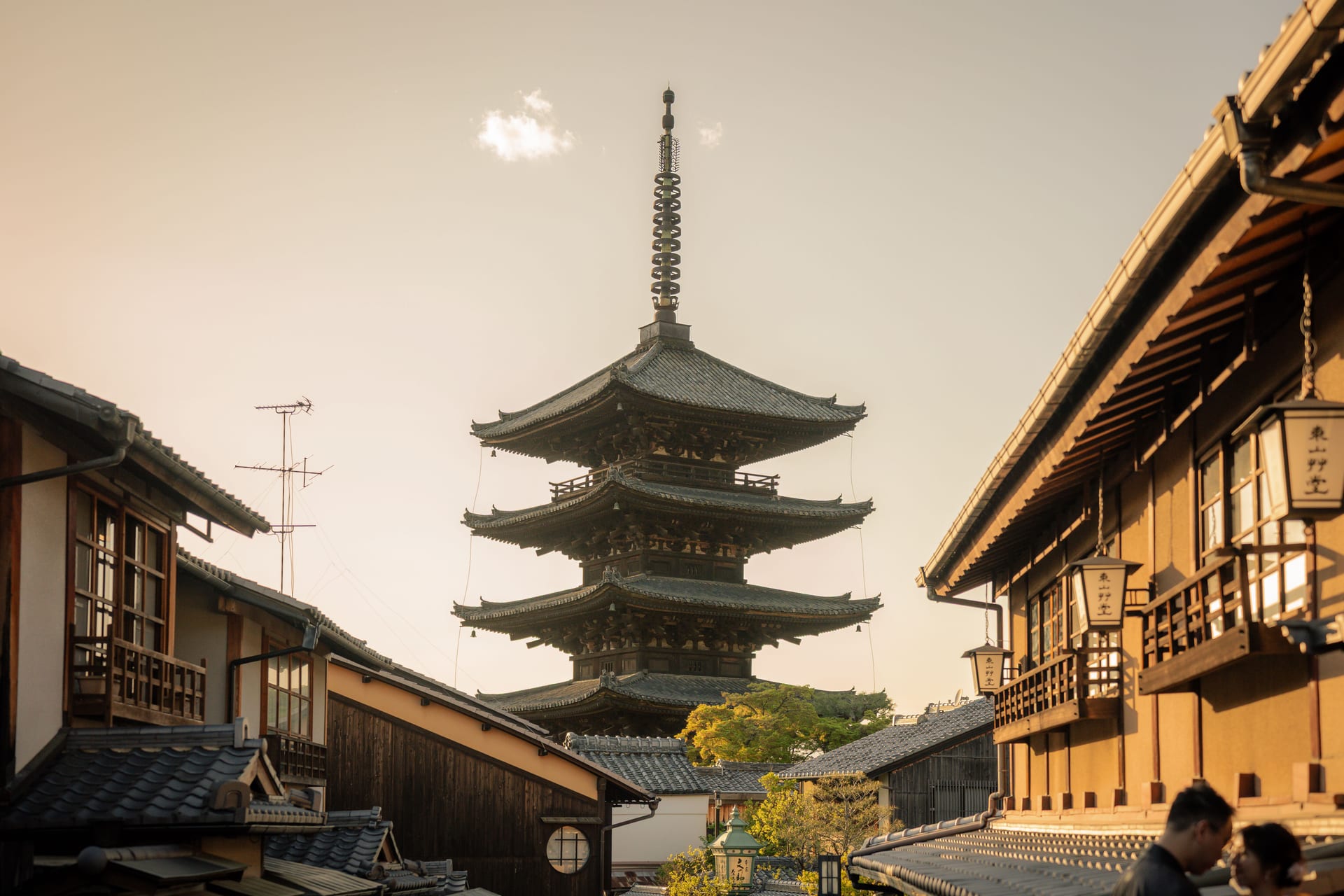
89/100Kyoto is immaculate, its historic streets and temple precincts tended with obvious care. The Kamogawa riverbanks, Gion's lanes and the shrine grounds make for a beautifully walkable public realm. Shrines and riverside cost nothing, but most of the famous temples charge to step inside.
Safety
96/100Safety here is close to absolute. Violent crime is rare to the point of being a non-issue, walking home alone at any hour is unremarkable, and even petty theft stays low. On the safety axis Kyoto stands with Tokyo at the very top of the global table, and traffic is orderly and forgiving too.
Healthcare
68/100Care quality is high and out-of-pocket costs stay low under the national insurance system, so a medical bill rarely becomes a crisis. The strains show in tighter doctor availability and, more pressingly for newcomers, limited English in clinics and hospitals, which can turn a simple appointment into a translation exercise.
Family life
66/100For families the foundations are strong: streets where children move freely, solid schools, and an unusually safe environment overall. Parks and playgrounds are decent. The harder edge is the work culture, where long hours and rigid expectations leave less room for family life than parents from Europe would expect, and roomy family housing is tight.
Career
63/100Kyoto has a respectable but focused market, with some technology activity and a modest professional network. Unemployment is low, but English-first roles are scarce and remote work is not a strong fallback. Typical local pay is slightly below the wider city median, so language ability matters for a locally rooted career.
Culture & food
79/100This is the cultural heart of Japan, and it shows. The food scene is world-class from humble counters to refined kaiseki, cafes and museums are everywhere, and the living traditions of the old capital run deeper than anywhere else in the country. Nightlife is quieter than Osaka's, and the scene leans local rather than international.
Ease of integration
41/100Daily life runs almost entirely in Japanese, and English goes only so far, so building a real social circle takes language effort and patience. The foreign community stays small and sits well behind Tokyo's, and locals, while courteous and orderly, can be slow to open the door to outsiders. Integration is a long game here.
Connectivity
68/100Getting around is effortless. Local transit is reliable, utilities never blink, and Kyoto sits on the bullet-train spine, putting Osaka, Tokyo, and much of the country within easy reach. Internet is fast. The weak spot is paperwork, where government services remain stubbornly analogue and slow to digitize.
Social values
mixedPublic life is famously orderly and high-trust, and religion stays largely a private and ceremonial matter. On the progressive measures, though, the city is conservative: gender roles remain traditional, LGBTQ acceptance lags, and openness toward foreigners is limited, in line with Osaka and Tokyo rather than ahead of them.
Relocation ease
43/100Settling in is one of Kyoto's hardest aspects. The language barrier is steep, the cultural adjustment is genuine, and apartment hunting, banking, and bureaucracy can frustrate newcomers who do not read Japanese. Visa and work-authorization hurdles are middling. Expect the practical side of the move to take real effort.
The trade-offs
A year in Kyoto
Aug peaks around 32°C, Jan days top out near 8°C, and the year brings roughly 183 bright days.
Can you actually move here?
The hard limits people most often bring to a move, scored against Kyoto's data.
Moving with a pet
Bringing a pet to Japan is doable but demanding, with strict rules, vaccination and microchip requirements, and a long preparation window that can stretch many months. Start the paperwork early to avoid quarantine on arrival.
Who Kyoto works for
Answer the questionnaire and see where Kyoto lands for you.
Take the free questionnaireWhere else to look
Kyoto vs. comparable cities
Objective scores (0–100) for Kyoto and its 4 nearest comparable cities.
The cities people weigh against Kyoto
Unexpected siblings
Far from Kyoto on the map, close across all 14 categories of daily life.

