
Living in Busan
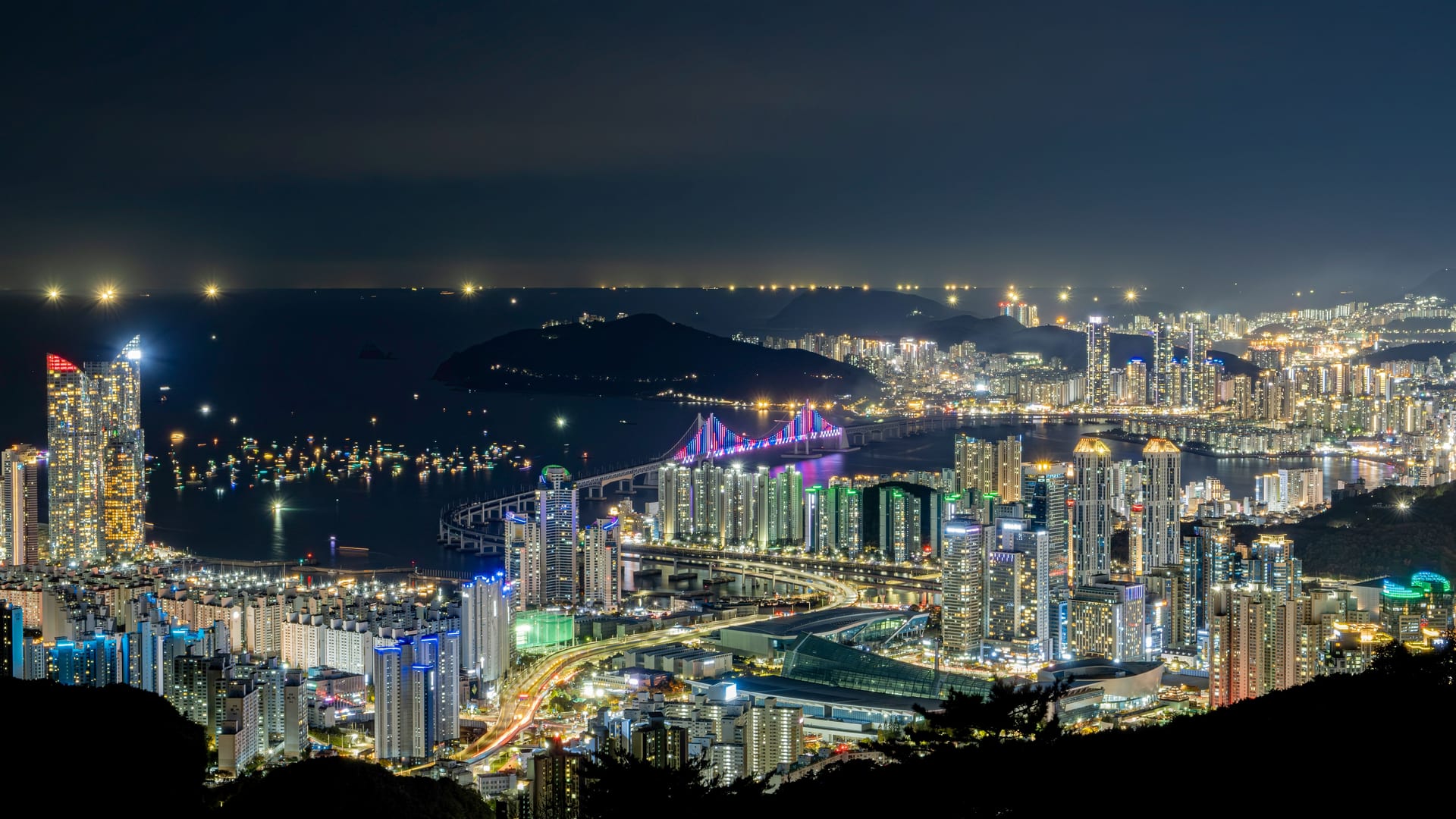
South Korea's second city, strung along the southeast coast where mountains drop straight into the sea. It runs at a calmer, more spread-out pace than Seoul, with far cheaper rents and the beaches and hiking trails right there. The trade-off is a smaller job market and a culture that asks newcomers to meet it on its own terms.
Busan at a glance
Vital stats
Shown in USD: the local currency (KRW) moves too fast for stable monthly figures.
Where Busan stands out
The metrics where Busan sits farthest from the middle worldwide, good and bad.
Cheap to arrive, expensive to stay?
A typical one-bedroom in Busan runs $325/mo. That is ~13% of one typical local employee’s mean net pay. This is a solo-newcomer stress test: sitting tenants, shared homes, subsidised housing and informal rents are deliberately outside the numerator.
The fastest way to test a shortlist is to go. A week on the ground tells you things no ranking can.
Partner link
Approved language-learning and international money resources for practical next steps.
Daily life in Busan
How Busan scores
Category by category
Affordability
73/100Busan's open-market one-bedroom rent on a new lease is about $325 per month. That is roughly 13% of one typical employee's mean net pay, a rent burden labelled manageable solo.
Climate
temperateBusan has a cool winter, with January averaging 4°C. Four seasons are distinct, and summer is humid and sticky, but about 231 bright days give the year plenty of clear weather. Storm exposure remains a seasonal consideration.
Nature access
coastalThis is where Busan pulls ahead of Seoul and Tokyo. The city wraps around beaches, harbours and forested ridges, so sand and serious hiking are both close to home. Coastal walks, mountain temples and weekend escapes into the national parks are all within easy reach. Formal green space per resident is thin, but the wild edges more than compensate.
Urban form
large citySmaller and noticeably less dense than Seoul, sprawled across valleys and coastline rather than packed into one core. Neighbourhoods are walkable and mixed-use, with shops, food and transit woven into where people live. The terrain means slightly more reliance on cars than in flatter Korean cities, and apartments tend to run compact. The overall rhythm is busy but less relentless than the capital.
Public life & spaces
81/100Busan feels clean for a port city, its Haeundae and Gwangalli beaches and downtown streets well kept. The waterfront and Jagalchi market are the draw, even if the city sprawls. Beaches and street food cost almost nothing, though organised culture and the bigger attractions are paid.
Safety
86/100About as safe as cities get. Violent crime is rare, streets stay calm after dark, and walking home late raises no real concern. Petty theft is low and the general sense of public safety is among the highest anywhere. The one soft spot is road traffic, where the safety record trails Berlin and Tokyo.
Healthcare
67/100Care is high quality, fast and affordable, with hospitals easy to reach and out-of-pocket costs kept low by the national system. Signing up is straightforward once residency is sorted. The real friction is language: English-speaking doctors are harder to find than in Seoul, and the overall density of physicians is on the lean side.
Family life
63/100Strong on the things parents worry about most. Schools are well regarded, children move around safely, and there's coastline and trails for an outdoor childhood. The hard part is the work culture, which runs long-hours and demanding by Korean norms, leaving less room for family time than a place like Berlin would. Childcare and parental leave sit in the middle of the pack.
Career
63/100Busan has a workable local market and very low unemployment, but English-language openings are scarce and the startup scene is modest. Local pay is above the wider comparison, yet the city remains a harder landing for newcomers without Korean or an employer already in place.
Culture & food
71/100Food is the headline. Busan is a seafood and street-food town with a deep cafe habit and a strong sense of its own coastal, port-city identity, distinct from Seoul's. The film and arts scene punches above the city's size. Where it falls short is the international layer: vegan and vegetarian choices are limited, and the foreign community and English signage are both thin compared with the capital.
Ease of integration
41/100Korean runs everything here, and English only goes so far once you step outside expat-facing spaces. The city scores low on openness to outsiders and has a small international community, so building local friendships takes real effort, patience and ideally some language learning. Newcomers who put in that work find a warm and loyal social world; those who don't can feel kept at arm's length.
Connectivity
69/100Genuinely excellent on the essentials. The metro and bus network is dense and reliable, internet is among the fastest in the world, and government paperwork is heavily digitized. High-speed rail ties the city into the national network, and utilities just work. Cycling infrastructure is the clear gap, held back partly by the hilly terrain.
Social values
mixedSocially conservative, in line with much of South Korea. Traditional expectations around gender and family still carry weight, LGBTQ acceptance lags well behind European cities, and the culture leans toward order and convention over individual expression. Civic trust and public orderliness are high. Visitors from more liberal cities should expect a real shift in social atmosphere.
Relocation ease
45/100Visa and work-authorization hurdles are about average, and tax and local bureaucracy are simpler than in Germany or Japan. The genuine barriers are language and cultural adjustment, both steep, since Korean is hard to crack and daily life assumes you'll adapt to it. Setting up housing and banking takes patience. Plan on a meaningful settling-in curve.
The trade-offs
A year in Busan
Aug peaks around 28°C, Jan days top out near 8°C, and the year brings roughly 231 bright days.
Can you actually move here?
The hard limits people most often bring to a move, scored against Busan's data.
Moving with a pet
Bringing a pet to South Korea is moderately involved, roughly on par with most developed Asian destinations. Expect microchipping, rabies vaccination and paperwork in advance, but no extreme quarantine for compliant cats and dogs from low-risk countries.
Who Busan works for
Answer the questionnaire and see where Busan lands for you.
Take the free questionnaireWhere else to look
Busan vs. comparable cities

The cities people weigh against Busan
Unexpected siblings
Far from Busan on the map, close across all 14 categories of daily life.
