
Living in Seoul
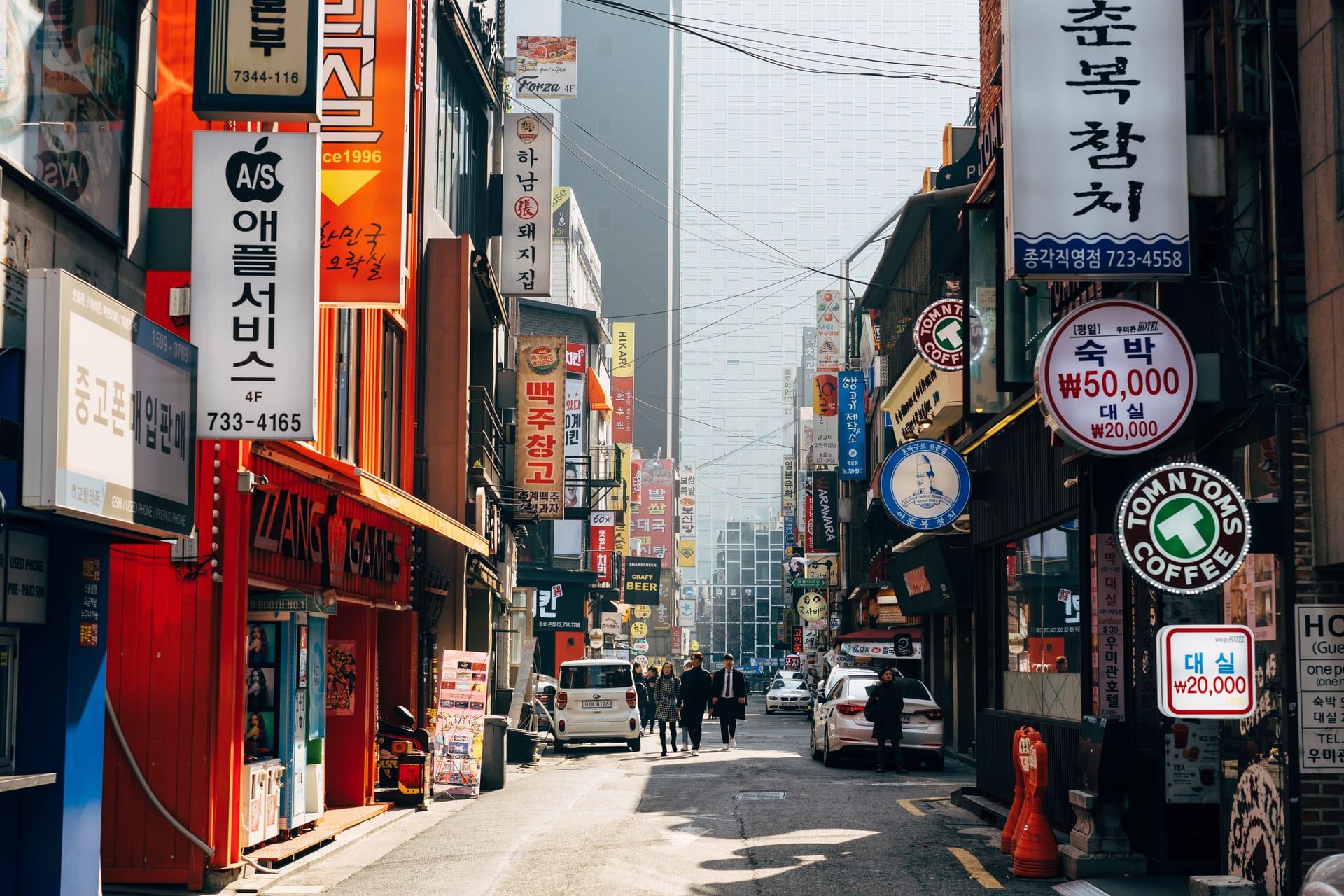
Seoul runs at a tempo few cities match, a dense grid of mountains, subway lines and round-the-clock convenience that rewards people who like a city wired tight. Rent and eating out land cheaper than in most rich-world capitals, and like Tokyo it feels remarkably safe and orderly. The trade-off is a hard-driving work culture and a language that takes real effort.
Seoul at a glance
Vital stats
Shown in USD: the local currency (KRW) moves too fast for stable monthly figures.
Where Seoul stands out
The metrics where Seoul sits farthest from the middle worldwide, good and bad.
Cheap to arrive, expensive to stay?
A typical one-bedroom in Seoul runs $605/mo. That is ~21% of one typical local employee’s mean net pay. This is a solo-newcomer stress test: sitting tenants, shared homes, subsidised housing and informal rents are deliberately outside the numerator.
The fastest way to test a shortlist is to go. A week on the ground tells you things no ranking can.
Partner link
Approved language-learning and international money resources for practical next steps.
Daily life in Seoul
How Seoul scores
Category by category
Affordability
70/100Seoul's open-market one-bedroom rent on a new lease is about $605 per month. That is roughly 21% of one typical employee's mean net pay, a rent burden labelled manageable solo.
Climate
continentalSeoul has a genuinely cold winter, averaging about -2°C in January, followed by a warm July around 26°C. The sky is a relative strength: clear days are plentiful and rainy-grey days are fewer than in many cities. Air quality is the catch, with pollution a more persistent concern than humidity.
Nature access
great hikingThe draw is the hills. Granite peaks ring the city and trails start almost at the subway exit, giving Seoul some of the best in-town hiking of any East Asian capital. Forests and the riverfront add to that. Green space per resident is thin, though, and the coast is far enough that beaches mean a real trip rather than a quick escape.
Urban form
megacityThis is dense, vertical, walkable city living at full volume, busier than almost anywhere and just shy of Tokyo's pace. Most daily life happens on foot and on the metro, owning a car is genuinely optional, and neighbourhoods stack shops, cafes and homes into the same blocks. Apartments tend to be compact, a bit tighter than Berlin and roomier than central Tokyo.
Public life & spaces
81/100Seoul is very clean and orderly, a modern megacity that runs like clockwork. The restored Cheonggyecheon stream, the palace grounds and downtown plazas are all walkable and well kept. Parks, markets and some palace areas are free, but a lot of the city's life is paid-for.
Safety
86/100Safety is one of Seoul's strongest cards. Violent crime is rare, walking home late feels normal across most of the city, and street-level petty crime stays low, in the same league as Tokyo. Traffic is the one caveat, with roads less forgiving than in Berlin, so the main thing to watch is the crossing rather than the crowd.
Healthcare
71/100Seoul's hospitals are fast, well-equipped and easy to reach, and out-of-pocket costs stay low thanks to national insurance, which is simpler to plug into than Germany's system. Care quality is high if a notch below Berlin or Tokyo. The friction for newcomers is language, with English-speaking doctors harder to find than in many European capitals.
Family life
61/100Families get strong schools and a city where children move around safely. The harder parts are structural. Work-life culture is demanding in a way that squeezes family time, on par with Tokyo and far from Berlin's balance, family-sized housing is costly, and outdoor childhood is limited by tight space and dense streets.
Career
78/100Seoul offers a substantial market with strong technology and professional networks, and unemployment is low. English-only access is narrow, while local pay is above the corpus midpoint. Korean fluency matters for anyone aiming at the local market, and remote work is less flexible than in many peer cities.
Culture & food
83/100Food and cafe culture here are a highlight, with a restaurant scene that edges past Berlin and a coffee obsession to rival Tokyo's. Nightlife, music and the arts all run strong. Where Seoul thins out is the international layer, the foreign community is smaller than in Berlin or Tokyo and daily life leans heavily Korean, with limited English on signs and menus.
Ease of integration
48/100Seoul is overwhelmingly Korean-speaking, with little everyday English to fall back on, so building a local circle takes real language effort. The culture prizes order and trust over openness to outsiders, and warmth toward foreigners is more reserved than in most European capitals. Connections form, but slowly, and usually on the other side of learning some Korean.
Connectivity
76/100Few cities anywhere match Seoul on infrastructure. The metro is world-class and matches Tokyo's, internet is among the fastest on earth, and government paperwork is heavily digitized, light-years ahead of Berlin's counters. The airport is a top global hub. Roads get congested at peak, but most residents simply skip the car.
Social values
mixedSeoul is socially conservative for a wealthy capital. Public life is orderly and high-trust, but attitudes on gender, LGBTQ acceptance and social liberalism sit well behind Berlin and somewhat behind Tokyo. Traditional expectations carry real weight in family and work life, which newcomers from more progressive places will feel.
Relocation ease
43/100The big hurdles are language and cultural fit, both steeper than in Europe and close to Tokyo's level. Visa and work-authorization routes are middling, neither easy nor punishing. On the plus side, bureaucracy is efficient and digitized once started, and banking and housing admin are manageable, so the friction is more about adjusting than about red tape.
The trade-offs
A year in Seoul
Jul peaks around 30°C, Jan days top out near 3°C, and the year brings roughly 228 bright days.
Can you actually move here?
The hard limits people most often bring to a move, scored against Seoul's data.
Moving with a pet
Bringing a pet to Seoul is moderately demanding, easier than Tokyo's strict process but well harder than Berlin's. Expect vaccination records, microchipping and likely a rabies titer test, so start the paperwork several months ahead.
Who Seoul works for
Answer the questionnaire and see where Seoul lands for you.
Take the free questionnaireWhere else to look
Seoul vs. comparable cities

The cities people weigh against Seoul
Unexpected siblings
Far from Seoul on the map, close across all 14 categories of daily life.
